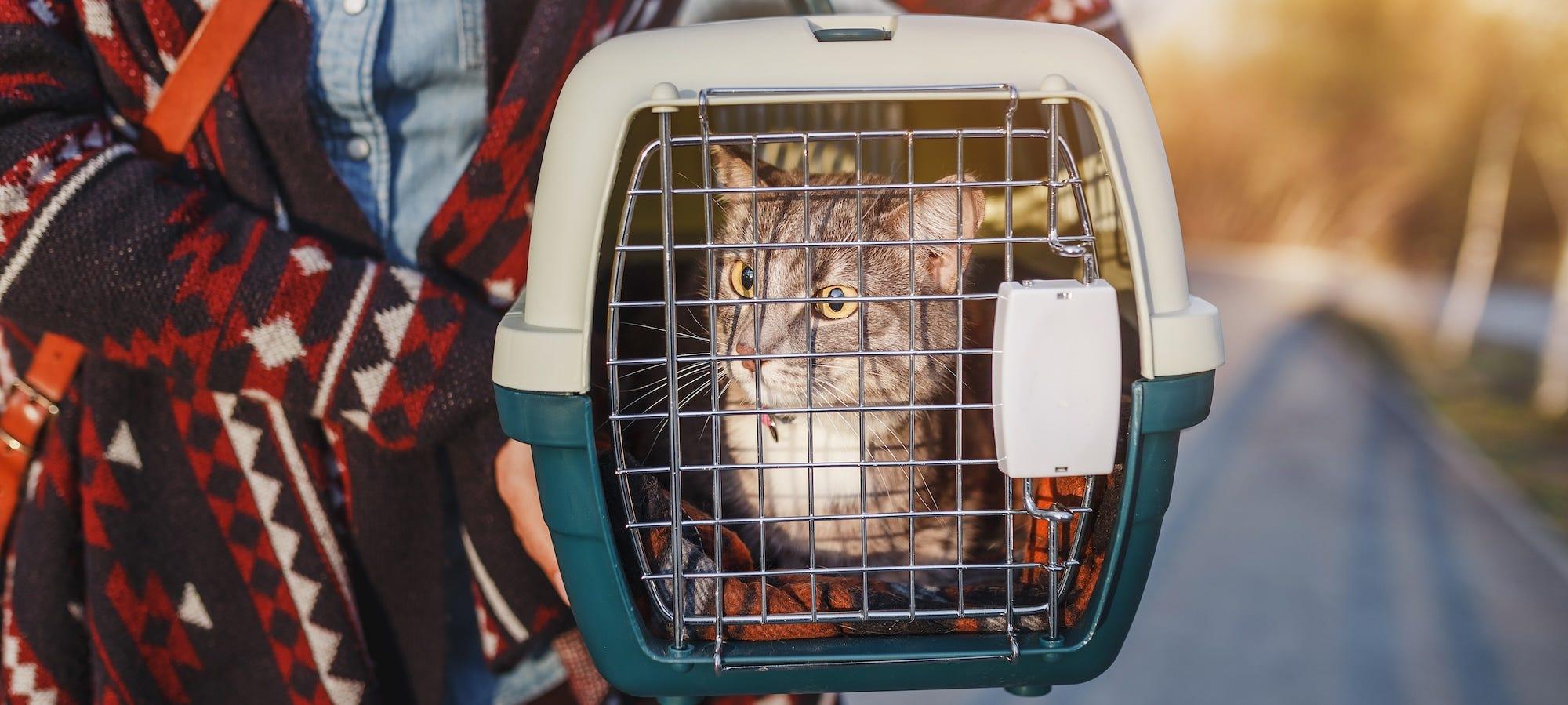


Most cat parents know the routine: you pull the carrier out of the closet, and suddenly your cat disappears. If getting your cat into a carrier feels like a battle every time you have a vet appointment or trip planned, you’re not alone.
Cat carrier training can make travel much less stressful for both of you. With patience and positive reinforcement, many cats learn to see their carrier as a safe place instead of a trap. This guide covers how to carrier train a cat over time, how to get a cat in a carrier when you need to leave quickly, how to calm a cat in a carrier during travel, and more.
In this article
Why cats hate carriers in the first place
Most cats don’t actually hate carriers, but rather hate what the carrier predicts.
If the only time the carrier appears is before a stressful car ride or a vet visit, your cat quickly learns to associate it with unpleasant experiences. Add unfamiliar smells, confinement, loud noises, and motion, and it’s easy to understand why many cats resist.
The goal of carrier training is to change that association. Instead of being something scary that only comes out for stressful events, the carrier should become another comfortable place your cat chooses to spend time.
Fear of the carrier is extremely common. It doesn’t mean your cat is stubborn or difficult. They’re simply responding to what they’ve learned.
The best carrier setup before you start training
Success starts with choosing the right setup.
Many vets recommend hard-sided carriers because they’re sturdy, easy to clean, and provide better protection during travel. However, high-quality soft-sided carriers can work well for airline travel and calmer cats.
Whenever possible, choose a carrier with a top-loading opening or two separate doors. Top-loading carriers make it so much easier to gently place a reluctant cat inside without forcing them through a small front opening.
Before carrier training:
- Place soft bedding or a favorite blanket inside.
- Add something that smells familiar, like a T-shirt you've recently worn.
- Leave the carrier out all the time instead of storing it in a closet.
- Put it in a room your cat already enjoys spending time in.
- Spray a feline pheromone product inside about 15 minutes before training sessions if recommended by your vet.
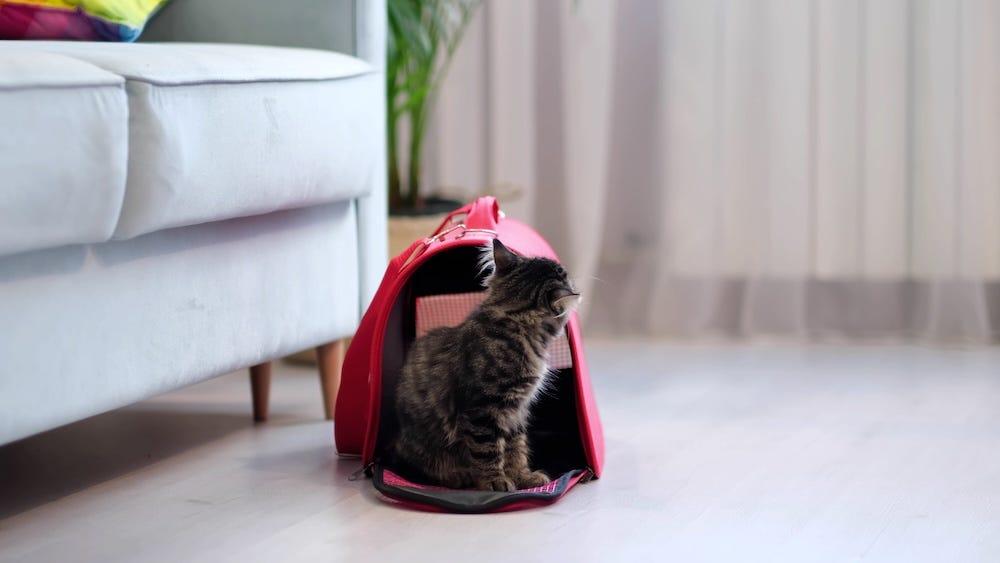
How to carrier train a cat step by step
Carrier training works best when you move at your cat’s pace. Some cats progress within a week, while others need several weeks of short, positive sessions.
Realistic timeline:
- Day 1–2: Sniffing or approaching the carrier
- Day 3–4: Reaching inside for treats
- Day 5–7: Walking into the carrier voluntarily
Remember, there’s no deadline. If your cat needs more time, simply stay at the current step until they’re comfortable.
Step 1: Let your cat investigate the carrier on their own
Place the carrier on the floor with the door securely open, or remove the door entirely if possible. Scatter treats around the entrance first, then gradually place them farther inside.
Avoid placing your cat in the carrier. Let curiosity do the work.
Step 2: Make the carrier rewarding
Once your cat is comfortable approaching it, start creating positive experiences.
Try:
- Feeding treats inside the carrier
- Offering part of a meal inside
- Placing favorite toys inside
- Using catnip if your cat enjoys it
- Keeping sessions to just a few minutes
The goal is for your cat to think, “Oh, good things happen here.”
Step 3: Build duration inside the carrier
As your cat starts entering willingly, reward them for remaining inside for a few extra seconds. Treats, praise, or gentle petting can all reinforce calm behavior.
Always end the session before your cat becomes restless or wants to leave.
Step 4: Introduce the door gently
Many cats become nervous once the door closes, so don’t rush this step.
Start by moving the door without closing it. Then:
- Close it for one or two seconds.
- Open it immediately.
- Reward your cat.
- Gradually increase the amount of time the door stays closed over several sessions.
Step 5: Add movement and real-life practice
Once your cat relaxes with the closed carrier, begin introducing movement. Start small:
- Lift the carrier for a few seconds.
- Walk across the room.
- Carry it outside briefly.
- Sit in the parked car.
- Eventually take a short drive around the block.
Each successful practice trip builds confidence before a longer journey.
How to get a cat in a carrier when you need to leave soon
Sometimes you don’t have weeks to train. A same-day vet visit or emergency requires a faster approach.
Best-case scenario: encourage your cat to walk in
If your carrier has already been left out around the house, try tempting your cat inside with high-value treats, wet food, or their favorite toys. Stay patient and avoid chasing your cat around the house, which will only increase their fear.
If your cat refuses
Reduce the environment instead of escalating the struggle.
Move your cat into a small, quiet room like a bathroom where there are fewer hiding places. Stay calm, move slowly, and avoid loud noises or sudden movements. If you have a top-loading carrier, it can make loading much easier than trying to guide your cat through a front door.
Emergency-only method: the towel wrap
If your cat absolutely must travel immediately, gently wrapping them in a towel (“kitty burrito”) can help prevent injury while lowering them carefully into a top-loading carrier.
This should only be used when absolutely necessary, not as part of regular training. Repeatedly forcing your cat into the carrier can undo weeks of positive progress.
How to calm a cat in a carrier
Even a well-trained cat can feel nervous during travel.
Before the trip
- Exercise your cat with play beforehand.
- Avoid rushing.
- Use familiar bedding inside the carrier.
- Consider pheromone spray if recommended by your veterinarian.
- Ask your vet whether anti-anxiety or anti-nausea medication may be appropriate for longer trips.
During the trip
- Keep the carrier level and secure with a seat belt if traveling by car.
- Speak softly if your cat responds to your voice, but avoid opening the carrier while traveling.
- Covering part of the carrier with a lightweight blanket can help some cats feel more secure by reducing visual stimulation.
After arrival
- Allow your cat time to decompress.
- Open the carrier in a quiet room and let them come out on their own instead of pulling them out.
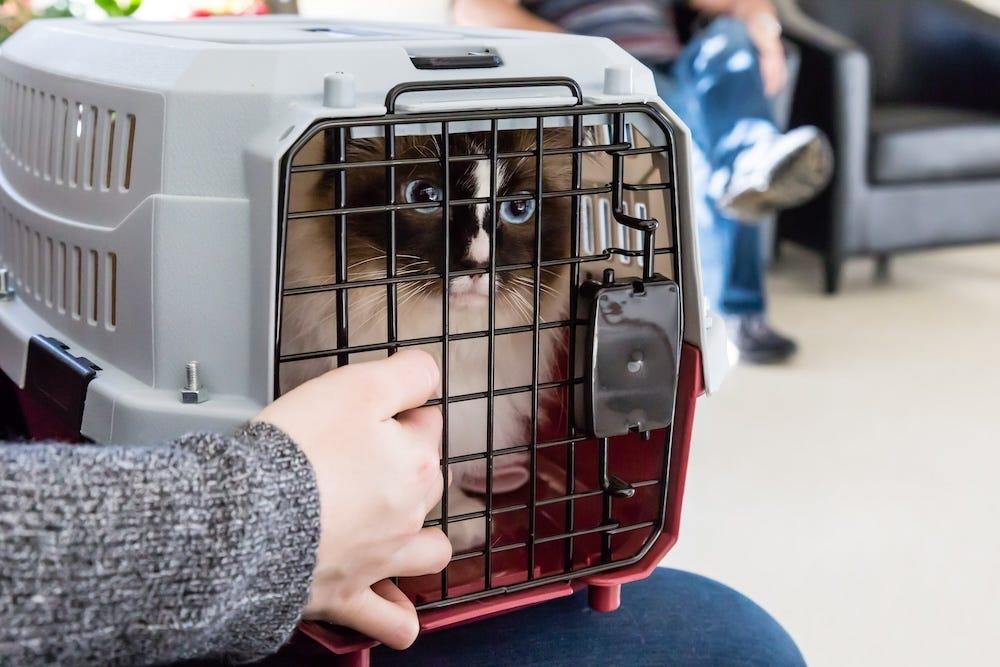
Mistakes that make carrier training harder
Well-intentioned cat parents can sometimes accidentally reinforce their cat’s fear. Common mistakes include:
- Only bringing the carrier out before vet visits
- Forcing or shoving your cat inside
- Moving too fast through the training
- Ending sessions after your cat panics
- Putting the carrier back into storage between trips
The more often your cat sees the carrier as a normal part of everyday life, the less threatening it becomes.
Training by cat type
Different cats might need slightly different approaches.
Carrier training a kitten
Kittens often adapt quickly because they haven’t developed years of negative associations with a carrier. Keep sessions playful, reward often, and use meals as part of training whenever possible.
Training adopted or rescue cats
Focus on helping your newly adopted cat feel safe in their new home before introducing carrier training.
Once they’re comfortable in their safe room, start leaving the carrier out for them to explore and work slowly through each step.
For cats already terrified of the carrier
If your cat panics at the sight of their carrier, it may be easier to start over with a different style. Treat it like a completely new object.
Reward tiny successes, even if the first few sessions involve nothing more than calmly looking at the carrier from across the room. Building confidence gradually is far more effective than trying to rush the process.