
A cat who skips a meal isn't always cause for alarm. But a cat who stops eating, or starts eating noticeably less, is telling you something. The tricky part is figuring out what.
Decreased appetite in cats, called hyporexia, can range from a stress response to a serious underlying disease. Cats are also good at masking how they feel, which means by the time the appetite loss is obvious, something may have been brewing for a while. This article walks through what to watch for, when to call a vet, and what to look for — including specific symptom combinations like vomiting, hiding, lethargy, and the deceptively reassuring "acting completely normal."
In this article
- Cat not eating: When should you worry?
- Cat not eating: Symptom guide
- How long can cats go without food?
- Why is my cat not eating? Common causes
- Why is my cat not eating but acting normal?
- Cat not eating as much: Is it serious?
- Why is my cat vomiting yellow liquid and not eating?
- Why is my cat vomiting white foam and not eating?
- Why is my cat not eating and sleeping a lot?
- Why is my cat hiding and not eating?
- What to do if your cat won't eat
Cat not eating: When should you worry?
The general rule: if it's been more than 24 hours and your cat hasn't eaten, start paying close attention. If it's been longer than that, call your vet.
The urgency goes up significantly if appetite loss is paired with anything else. Vomiting, drooling, hiding, lethargy, or any sign of pain aren't just additional symptoms — they change the picture. Don't wait on those combinations.
A few categories deserve faster action regardless of how long it's been:
- Kittens can decline quickly and don't have the reserves adult cats do
- Senior cats are more likely to have underlying disease driving the change
- Cats with known health conditions, like kidney disease, diabetes, heart disease, need same-day attention if their appetite drops
One exception worth noting: cats who've recently had surgery, a dental cleaning, vaccines, or started a new medication may have a mild, short-term dip in appetite. That's expected. If it lasts more than a day or two, or they seem unwell otherwise, still call.
Cat not eating: Symptom guide
|
Symptom combo |
Concern level |
What to do |
|
Missed one meal, otherwise normal |
Watch closely |
Monitor, offer fresh food and water |
|
Eating less for more than 24 hours |
Moderate |
Call your vet |
|
Vomiting yellow liquid and not eating |
Same-day |
Call your vet |
|
Vomiting white foam and not eating |
Same-day |
Call your vet |
|
Hiding and not eating |
High |
Call your vet |
|
Sleeping much more and not eating |
High |
Call your vet |
|
Drooling, repeated vomiting, weakness, or total refusal to eat |
Urgent |
Seek urgent veterinary care |
How long can cats go without food?
Not long. This is one of the things that makes feline appetite loss different from other species.
Cats who stop eating for more than a few days are at risk for hepatic lipidosis, also called fatty liver disease. When a cat's body starts mobilizing fat stores for energy without adequate protein intake, the liver can become overwhelmed. It's one of the more serious and unfortunately common consequences of prolonged anorexia in cats, and it can develop faster than most owners expect.
The answer to "how long can my cat go without food" is technically a few days, but that's not the threshold to aim for. If your cat hasn't eaten in 24 hours and you can't identify an obvious, benign reason, that's already worth a call. Waiting to see if they come around on day three is waiting too long.
For a deeper look at the timeline, this article on how long cats can go without food covers it in more detail.
Why is my cat not eating? Common causes
Stress or environmental changes
Cats are creatures of habit, and disruption shows up in their appetite fast. A new pet, a new baby, a houseguest, a recent move, a change in food — any of these can cause a cat to go off their regular meals. This is usually short-lived, but it still warrants monitoring.
Mouth and dental pain
This one gets missed more than it should. A cat with gingivitis, an infected tooth, or resorptive lesions may approach the food bowl and then walk away, not because they're not hungry, but because eating hurts. If your cat seems interested in food but won't commit, dental pain is worth considering.
Nausea, GI issues, and constipation
Foreign body ingestion, constipation, inflammatory bowel disease, and pancreatitis can all cause appetite loss. Nausea often looks like disinterest in food or occasional drooling. Cats don't always vomit even when they feel sick.
Organ disease and metabolic illness
Kidney disease, liver disease, diabetes, anemia, and cancer are all capable of suppressing appetite often gradually, which is part of what makes them easy to miss early on. Weight loss paired with decreased appetite in a middle-aged or older cat is always worth investigating with your veterinarian.
Medication or procedure-related appetite loss
Post-surgical recovery, recent vaccines, dental cleanings, and new medications can all cause a temporary dip. This is expected and usually resolves within a day or two. If it doesn't, follow up with your vet.
Why is my cat not eating but acting normal?
This is a question I hear a lot, and the honest answer is: acting normal doesn't rule much out.
Cats are exceptionally good at masking pain and illness. It's a survival instinct. A cat with early kidney disease, dental pain, low-grade nausea, or the beginning of a systemic illness may behave completely normally in every other way while quietly eating less. By the time behavior changes become obvious, the underlying problem has often had time to progress.
If your cat's appetite is down for more than a day and they seem otherwise fine, don't let the "otherwise fine" talk you out of calling. Appetite is one of the most reliable early indicators we have.
Cat not eating as much: Is it serious?
Eating less still matters. Gradual decreases in appetite are actually harder to catch than sudden refusal to eat. This can point to dental disease, kidney disease, GI problems, or cancer-related changes in metabolism.
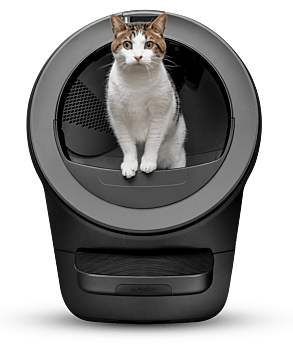
In multi-cat households this is especially easy to miss. If multiple cats share a bowl or eat in the same area, it's genuinely difficult to track how much any one cat is consuming. Separate feeding stations and an automatic cat feeder or self-cleaning litter box that tracks usage patterns can both help you notice changes earlier.
If you think your cat might be eating less but you're not sure, that uncertainty itself is worth paying attention to.
Why is my cat vomiting yellow liquid and not eating?
Yellow vomit is usually bile, which the stomach produces even when empty. It's not uncommon for cats to vomit bile occasionally, especially if they go long stretches between meals, but when it's paired with appetite loss, the combination matters more than either symptom alone.
If your cat vomits yellow liquid once and goes back to eating normally, watch and wait. If they're vomiting repeatedly and not eating, same-day vet contact is appropriate and recommended. Add lethargy to that picture and it becomes urgent.
Why is my cat vomiting white foam and not eating?
White foam typically points to stomach irritation or empty-stomach vomiting. The stomach lining is producing mucus with nothing else to expel. Like yellow vomit, a single episode in an otherwise normal cat is less concerning than a pattern.
The combination of white foam vomiting and appetite loss, especially if repeated, warrants attention. And it's a good reminder that vomiting in cats is never truly normal, even when it seems routine. This article on cat vomiting covers that in more depth.
Why is my cat not eating and sleeping a lot?
Lethargy and appetite loss together are more concerning than either on its own. This combination can point to pain, fever, dehydration, GI disease, or organ dysfunction.
Older cats do sleep more as they age, and it's easy to normalize. But increased sleep paired with decreased appetite is not something to write off as "just getting older." It's a reason to call your vet.
Why is my cat hiding and not eating?
Hiding is one of the more telling signs that a cat doesn't feel well. In the wild, a sick or injured cat is a vulnerable cat, so the instinct is to find a quiet, concealed spot and wait it out. When your cat starts spending time in places they don't normally go, that's information.
Hiding plus not eating is a stronger red flag than appetite loss alone. It suggests your cat isn't just off their food, they're withdrawing. That combination warrants a vet call, not a wait-and-see approach.
What to do if your cat won't eat
First, rule out anything obvious: is the food fresh? Has the bowl been cleaned recently? Did anything change in the environment? Sometimes the fix is simple.
If the environment checks out, there are a few things worth trying to stimulate appetite:
- Canned tuna in water (not oil)
- Meat-based baby food- check that it contains no onion or garlic
- Warmed canned food- heating releases more aroma, which sometimes matters for cats
- Low-sodium broth without onion or garlic
- Bonito flakes on top of their regular food
- Prescription recovery food if your vet has recommended it
- A small amount of treats, like Churu, to get things started
One important note: don't force feed! It sounds counterintuitive, but syringe feeding or forcing food on a nauseated cat can create a food aversion that makes the problem worse, not better. If your cat needs nutritional support, that's a conversation for your vet.
Signs your cat is nauseated, not just picky
There's a difference between a cat who's being selective and one who genuinely feels sick. Signs that point toward nausea:
- Drooling near the food bowl
- Approaching food and then turning away
- Vomiting shortly after eating or attempting to eat
A picky cat will usually eat something eventually. A nauseated cat won't, and pushing food isn't going to help.
The bottom line: cats don't skip meals casually. When appetite changes, it's worth taking seriously, especially if anything else seems off. The earlier you catch it, the more options you have!