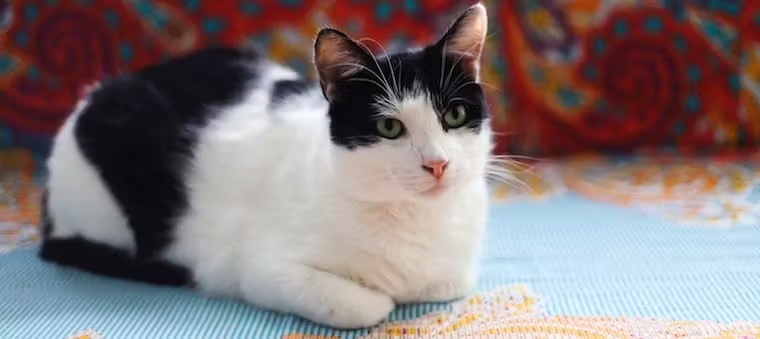
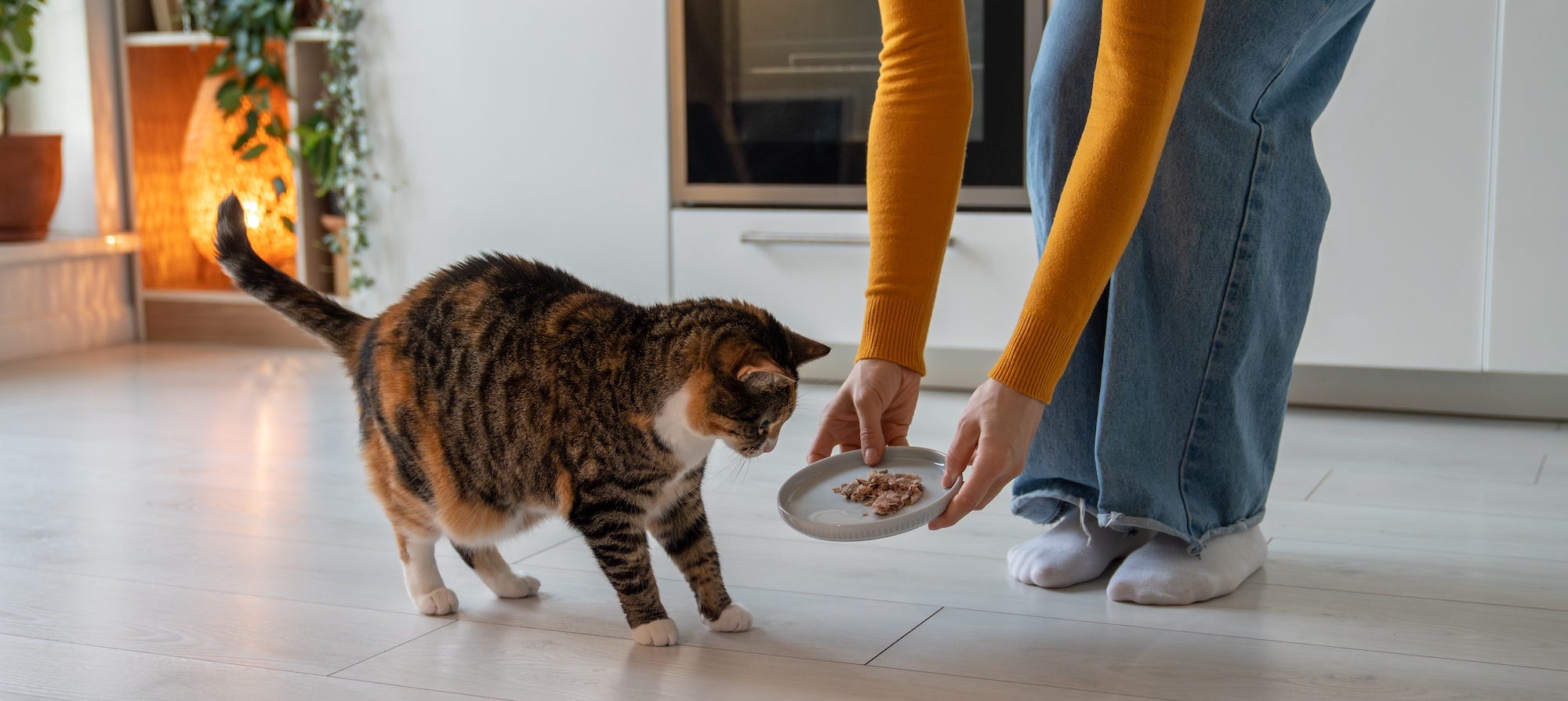

If your cat’s looking a little more Garfield than graceful these days, you’re not alone! Over half of the domestic cat population in the U.S. is overweight or obese. While the extra fluff might seem cute or inevitable, it can actually put your cat at risk for serious health issues like diabetes, arthritis, and liver disease. Helping your cat slim down isn’t about putting them on a crash diet. It’s about small, consistent changes that support their health long-term.
Let’s walk through how to recognize if your cat is overweight and what steps you can take to safely and effectively help them shed the excess weight.
Is my cat overweight?
It’s a fair question, especially if your cat is fluffy or you’re used to seeing them a certain way. The best way to tell if your cat is overweight isn’t just looking at the number on the scale. It’s understanding their body condition score (BCS). This is a 1 to 9 scale used by vets to assess your cat’s shape, with 1 being skin and bones and 9 being morbidly obese. The goal is to keep pets in the middle at 4 or 5.
A cat with an ideal weight has a visible waistline when viewed from above and a slight tummy tuck when viewed from the side. You should be able to feel their ribs easily.
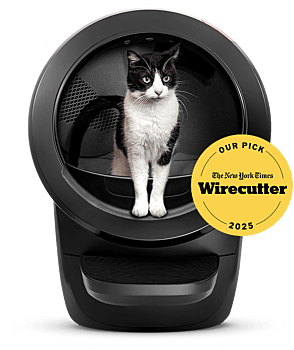
If you’re unsure where your cat falls on the scale, check out this guide on average vs. healthy cat weight and talk to your vet about what their body condition assessment is for your pet. You can also weigh your cat weekly or monthly using a digital scale (just weigh yourself holding them, then subtract your own weight). Or, if you have a Litter-Robot self-cleaning litter box, you’ll be able to track their weight daily over time.
Why does my cat eat so much?
We’ve all seen it: a cat yowling at their bowl 20 minutes before and after breakfast. Sometimes it’s just behavioral, but in other cases, it can stem from boredom, lack of activity, or even health conditions. If your cat seems to always be begging for food, check out this guide on why your cat is always hungry.
How to help a cat lose weight
1. Portion control
Free feeding (leaving food out all day) is one of the fastest ways for cats to pack on extra pounds. Switching to consistent, measured meals allows you to control calorie intake and creates a routine.
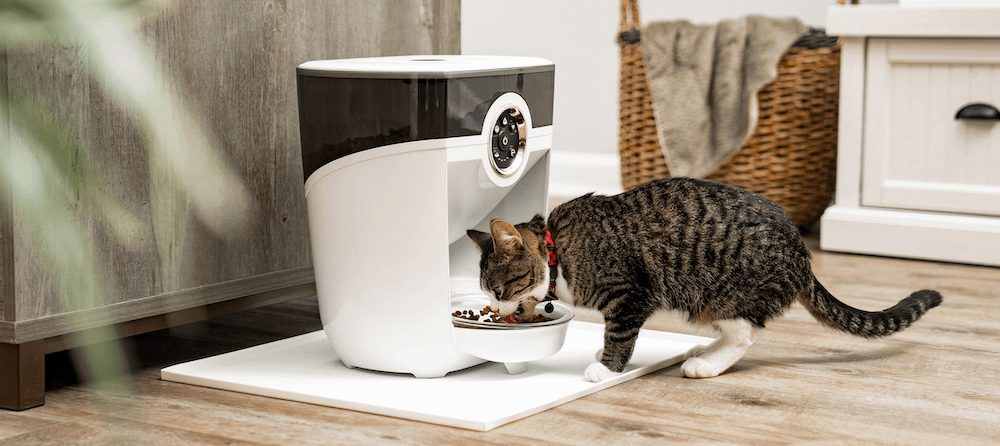
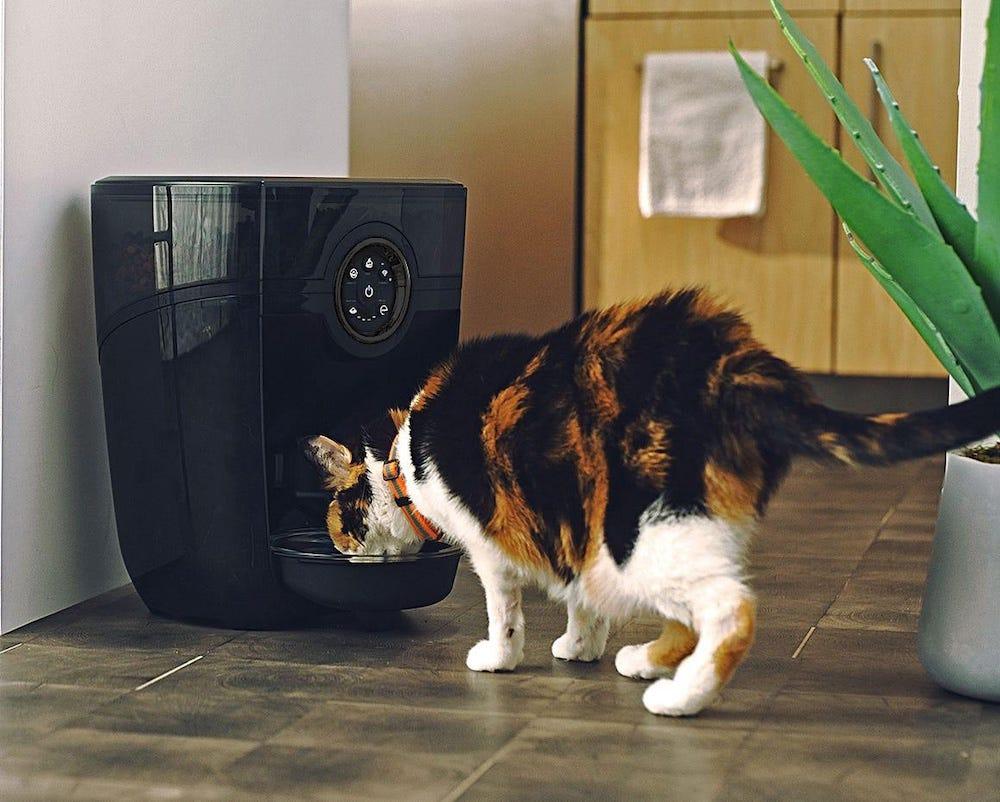
Using an automatic cat feeder can help by ensuring meals are delivered on schedule and in the right portion size. Here's more on how much you should be feeding your cat.
2. Feed smaller, more frequent meals
Instead of one or two big meals a day, try splitting their daily food amount into three or four smaller meals. This keeps their metabolism steady and reduces the chance of scarf-and-barf behavior (vomiting after overeating).
3. Increase regular activity
Let’s face it: most indoor cats lead a pretty sedentary life. Playtime and enrichment are key. Aim for at least 15-30 minutes of interactive play every day. Wand toys, laser pointers, and even treat-dispensing puzzle toys can all get them moving. Bonus points if you add vertical spaces (like cat trees or shelves) for them to climb. Double bonus points if you leash train your cat to go on walks!
4. Create a feeding schedule
Cats love routine. Set specific feeding times and stick to them. If your cat wakes you up at 5 a.m. begging for food, you might consider shifting the last meal later in the evening or using an automatic cat feeder for consistency.
5. Choose weight management cat food
Weight management diets are specifically formulated to help cats feel full while consuming fewer calories. They often include higher fiber and protein content.
If you’re switching foods, transition gradually over one week to avoid GI upset. Mix a small amount of the new food with the old, slowly increasing the new food’s proportion.
Look for options that list real meat as the first ingredient and avoid foods with fillers or artificial preservatives. Some of the vet-recommended best cat food for weight loss include:
- Hill’s Science Diet Adult Perfect Weight
- Royal Canin Satiety Support (prescription)
- Purina Pro Plan Weight Management
6. Mitigate treats
Treats should be less than 10% of your cat’s daily calorie intake. Opt for low-calorie options, or better yet, use a portion of their regular kibble as a treat. Freeze-dried meats or lickable treats in moderation can also work well.
7. Track progress weekly
Weight loss should be slow and steady, no more than 1-2% of their body weight per week. Keep a log of weekly weigh-ins and behavior changes. You can use your Litter-Robot or a digital scale to keep track at home.
8. Exercise: Yes, even for lazy cats
Try these:
- Feather wand: mimics prey, sparks natural hunting instinct
- Laser pointer: great for cardio, just don’t forget to end with a toy they can physically catch
- Cat tunnels or boxes: perfect for zoomies
- Timed play sessions before meals: helps rev up metabolism
How to help your cat lose weight when you have multiple cats
Feeding strategies in multi-cat homes become especially important when one cat needs to lose weight. Try these tips:
- Separate feeding areas – Feed cats in different rooms to prevent food stealing.
- Microchip or RFID feeders – These open only for the cat with the programmed microchip, ensuring each cat eats only their food.
- Elevated feeding spots – If one cat is more agile, you can feed them on a higher surface away from others.
- Timed feeding – Instead of free feeding, offer meals at specific times.
- Puzzle feeders and slow feeders – These encourage slower eating and add mental stimulation.
Cat weight loss mistakes to avoid
Here are some no-nos:
- Skipping meals: This can lead to a serious condition called hepatic lipidosis (fatty liver disease). Never starve your cat.
- Crash diets: Rapid weight loss is dangerous. It’s not a race.
- Overfeeding treats: A few extras a day can completely undo your efforts.
- Only focusing on food: Exercise/enrichment is half the equation. A bored cat will snack out of habit.
When to talk to your vet
If your cat isn’t losing weight despite your best efforts, or if they’re gaining weight rapidly, make an appointment. Some underlying medical conditions can interfere with weight management. Your vet can help create a plan that’s tailored to your cat’s health needs.
Final thoughts
Helping your cat lose weight takes patience, consistency, and even some creativity. But it’s one of the best things you can do for their long-term health. If you're feeling stuck or overwhelmed, don’t hesitate to ask your vet for guidance.
Remember: It’s not about the number on the scale. It’s about helping your cat live a longer, healthier, happier life.