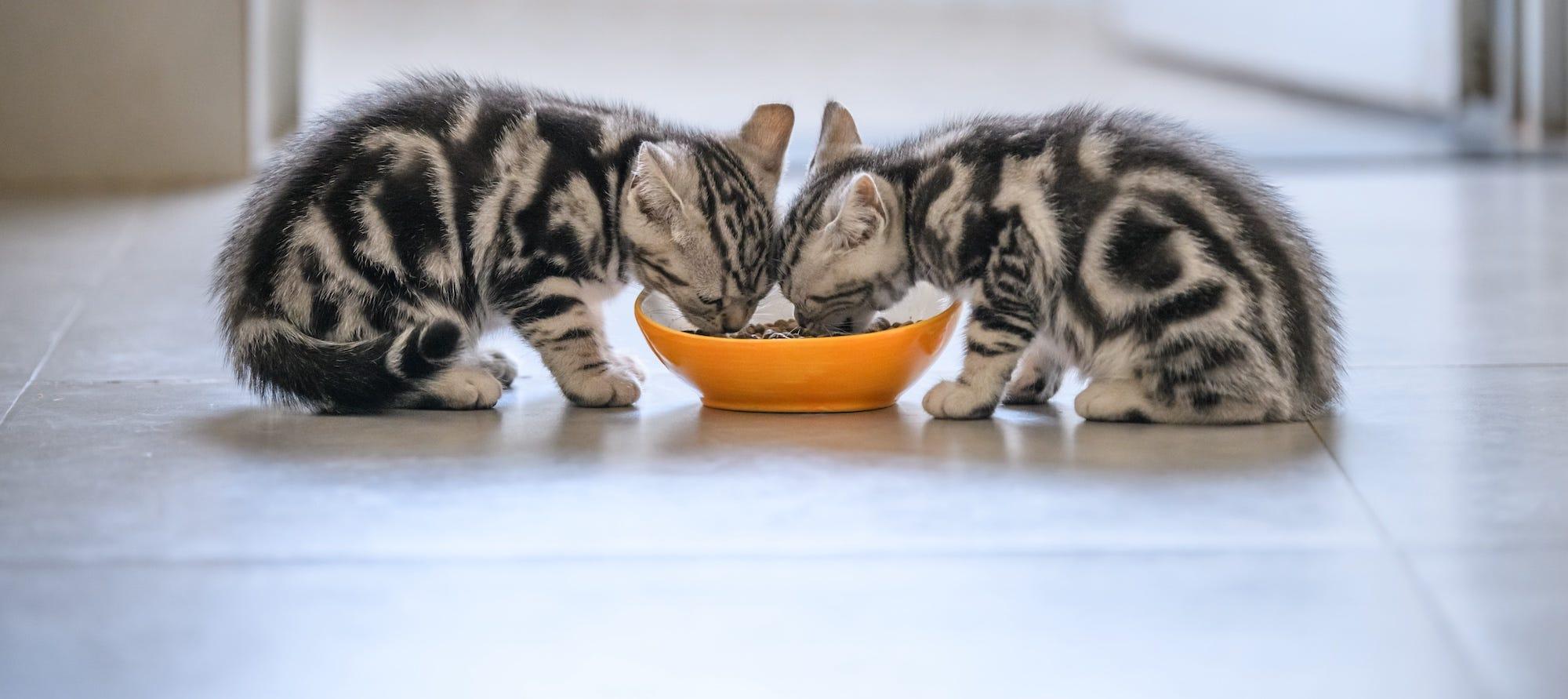


If you’ve recently brought home a kitten, one of the first questions you’ll have is: what do kittens eat, and how much is enough?
Feeding a kitten isn’t as simple as scaling down an adult cat’s diet. Kittens grow fast, burn a ton of energy, and need the right balance of nutrients at each stage of development. The good news? Once you understand the basics, it becomes much easier to build a feeding routine that supports healthy growth.
In this guide, we’ll walk through what kittens eat at each stage, share a practical kitten feeding chart by age, and help you spot any red flags along the way.
What do kittens eat?
A kitten’s diet changes quickly in the first few months of life. Here’s a simple breakdown of their growth stages and what they should be eating:
- 0 to 4 weeks – Mother’s milk or kitten milk replacer only
- 4 to 8 weeks – Milk + soft, wet food (weaning stage)
- 8 to 16 weeks – Mostly wet kitten food, with some dry introduced
- 4 to 12 months – Combination of kitten wet and dry foods
In the earliest weeks, kittens rely entirely on milk. If the mother isn’t available, a high-quality kitten milk replacer is essential. Never use cow’s milk, as it can cause digestive upset.
As kittens grow, they gradually transition to solid food. During this time, stick to kitten-specific formulas labeled for growth — they’re higher in calories, protein, and essential nutrients.
It’s also important to avoid feeding human foods. While some are safe in moderation, many can upset a kitten’s stomach or even be toxic. When in doubt, stick to a balanced kitten diet.
Kitten feeding chart
Kittens need frequent meals and enough calories to support rapid growth. The chart below gives a general guideline.
Kitten feeding chart by age
|
Age |
Calories/day |
Food amount (approx.) |
Meals/day |
|
0–4 weeks |
Varies |
Bottle feeding only |
Every 2–4 hours |
|
4–8 weeks |
150–250 kcal |
Wet food + formula |
4–5 meals |
|
8–12 weeks |
200–300 kcal |
~2–3 small cans or mix |
4 meals |
|
3–6 months |
250–350 kcal |
Wet + dry mix |
3 meals |
|
6–12 months |
300–400 kcal |
Wet + dry mix |
2–3 meals |
Kitten bottle feeding
For very young kittens:
- Feed every 2 to 4 hours, including overnight
- Follow milk replacer instructions closely
- Adjust amounts as the kitten gains weight
Sample feeding schedules (for weaned kittens)
- 8 to 12 weeks – 4 small meals per day (mostly wet or wet + dry)
- 3 to 6 months – 3 meals per day
- 6 to 12 months – 2 to 3 meals per day
Consistency matters. Feeding at the same time each day helps regulate digestion and behavior.
How to customize the chart
Every kitten (and every food) is a little different. To adjust the chart:
- Check the kcal per can or cup on your food label
- Match your kitten’s daily calorie needs
- Divide that into meals based on their age
- If mixing wet and dry, split calories accordingly
If your kitten is gaining weight too quickly, or not enough, you may need to adjust portions slightly.
How much should I feed my cat vs. my kitten?
Kittens aren’t just small cats, they have completely different nutritional needs. Feeding a kitten like an adult cat can actually lead to stunted growth or nutrient deficiencies. They require more calories per pound, higher protein and fat levels, and more frequent meals.
Most cats can transition to an adult feeding plan around 10 to 12 months old, though larger breeds may take longer. At that point, you can gradually shift away from the kitten feeding chart and toward an adult feeding guide.
Red flags: when to call the vet about feeding & weight
It’s normal for kittens to have big appetites, but there are times when feeding issues signal something more serious.
Signs your kitten isn’t getting enough
- Visible ribs or lack of weight gain
- Low energy or weakness
- Constant crying or restlessness
Signs you’re overfeeding
- Rapid weight gain
- Loose stools
- Lethargy after eating
Special cases to watch
- Bottle babies refusing to eat should be seen by a vet quickly.
- Vomiting or diarrhea shouldn’t be managed by cutting food alone, call your vet.
- Large breeds (like Maine Coons) may need longer growth periods and adjusted portions.
When in doubt, a quick vet check is always the safest option.
How food shows up in the litter box (and what it tells you)
Your kitten’s litter box is one of the best ways to monitor their health.
Healthy stools should be:
- Firm but not hard
- Brown in color
- Easy to pass
Changes in stool — like diarrhea, constipation, or unusual color — can signal dietary issues or underlying health concerns.
Keeping the litter box clean also makes it easier to notice these changes early. Regular scooping and monitoring habits can help you catch problems before they become serious.
FAQ
When do kittens stop nursing?
Kittens typically begin weaning around 4 weeks and are mostly done by 6 to 8 weeks.
You’ll start to notice signs like chewing on the mother’s nipple, showing interest in food dishes, and lapping at wet food. During this stage, gradually reduce milk while increasing solid food.
When can kittens eat dry food?
Kittens can start nibbling dry food around 5 to 6 weeks, but it’s best softened at first. By 8 to10 weeks, most kittens can handle dry food on its own.
Look for signs like chewing comfortably, drinking water regularly, and no coughing or choking. And always choose a kitten-specific formula with small, easy-to-chew kibble.
My kitten always acts hungry—should I feed more?
Maybe, but not always. Kittens are naturally hungry because they’re growing fast. However, constant hunger can also mean the meals are too small, the food isn’t calorie-dense enough, or growth spurts are happening. If your kitten seems constantly hungry despite proper portions, check with your vet.
Can kittens have raw food?
Raw diets are controversial, especially for kittens. While some owners choose this route, it requires careful balancing to avoid nutritional deficiencies and food safety risks. For most kittens, a complete and balanced commercial kitten food is the safest and easiest option.
Feeding a kitten doesn’t have to be complicated, but it does require a little planning. By following a kitten feeding chart by age, choosing high-quality kitten food, and paying attention to your kitten’s behavior and litter box habits, you can set them up for healthy growth.
When in doubt, remember: growing kittens need more food, more often, and a little extra attention along the way.