
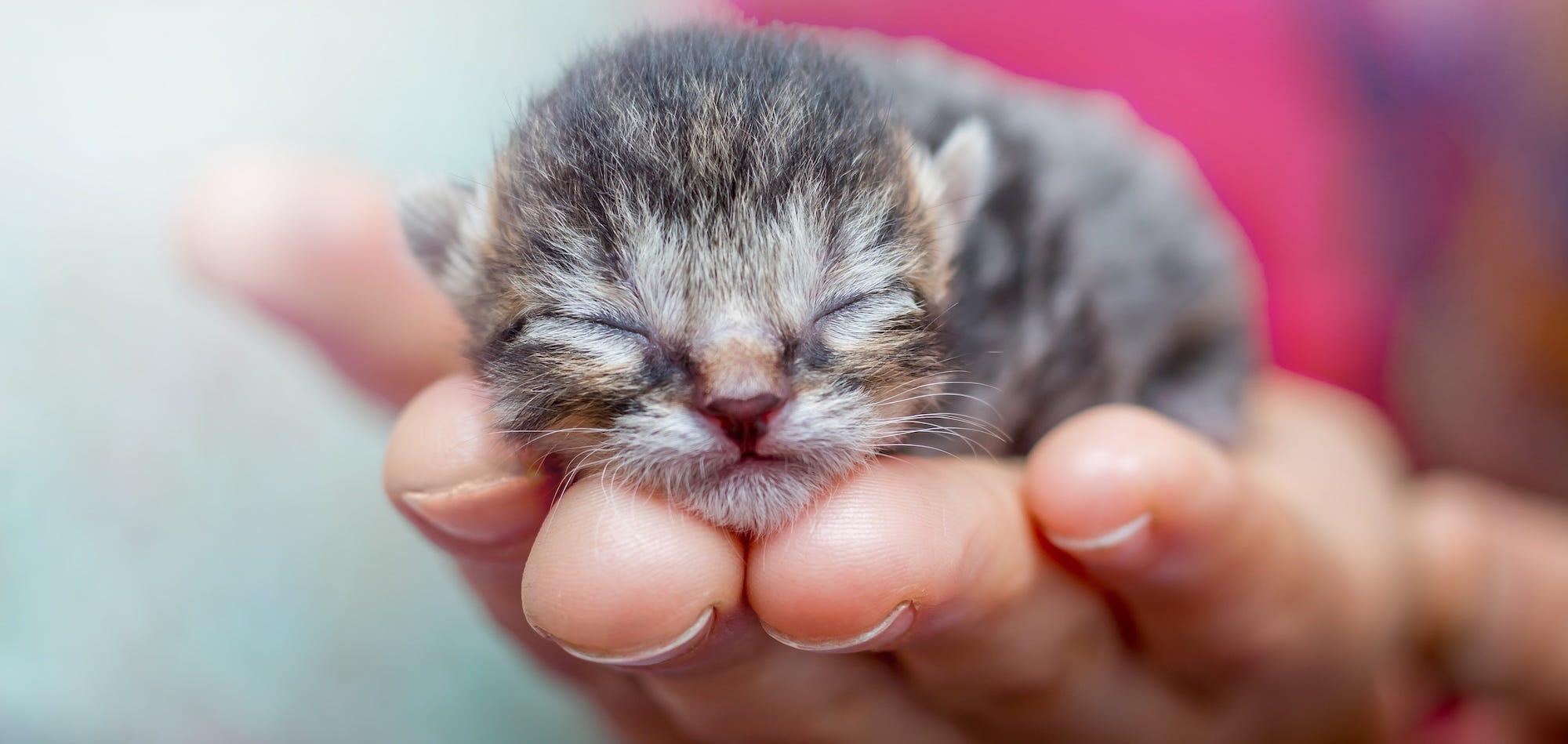

As a veterinarian, one of the most common questions I get from neonate cat parents is: “Is my kitten developing normally?” The early weeks of a kitten’s life move fast. One day they’re tiny and fragile, and before you know it they’re sprinting across your house at full speed.
Understanding kitten growth stages helps you know what’s normal, what’s coming next, and when to step in with support. It also makes you feel more confident raising a healthy neonate kitten.
In this article
Quick overview: Kitten growth chart
I like to think about kitten development as a progression of capabilities. Early on, neonate kittens are completely dependent. Then they start to open their eyes, then move, then play, then eat independently, and finally turn into thriving kittens. The biggest changes happen in the first 8–12 weeks.
Age identification clues
| Clue | Estimated Age |
|---|---|
| Eyes closed | Under 1 week |
| Open blue eyes | 2–4 weeks |
| Upright ears & early walking | Around 3 weeks |
| Teeth erupting & active play | 4+ weeks |
| ~1 lb body weight | About 1 month |
| ~2 lbs body weight | About 2 months |
Kitten growth stages
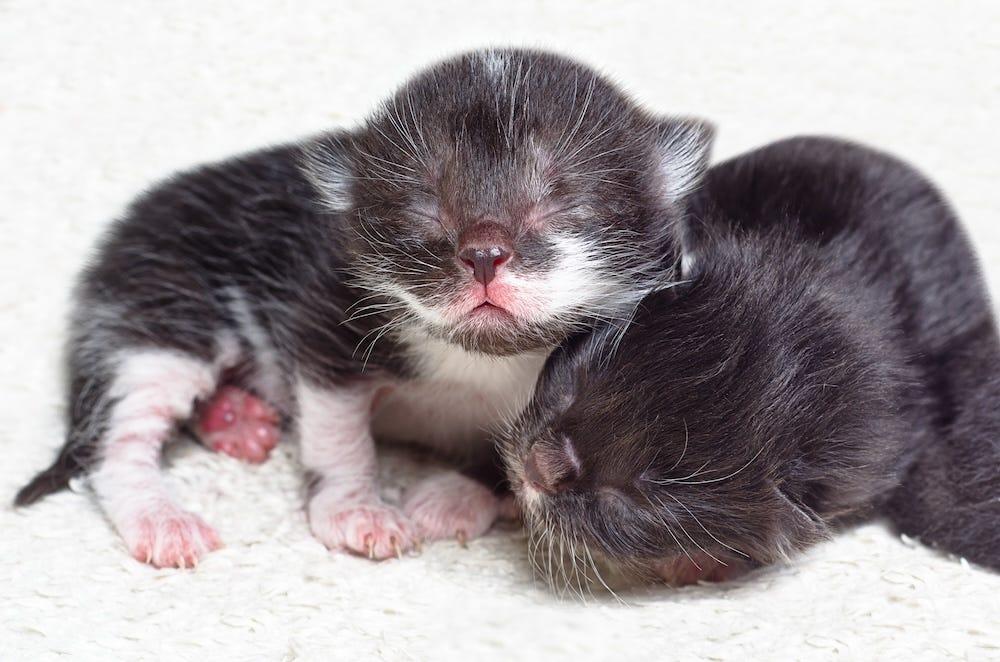
Newborn (0-1 week) - Neonatal
At this stage, kittens are completely dependent on their mother. Their eyes and ears are closed, and they rely on smell and touch to find warmth and nurse.
Neonates can’t regulate their body temperature, so warmth is critical. They sleep almost constantly and nurse every few hours. If you’re caring for a neonatal kitten, your main job is keeping them warm, feeding, and minimizing stress. If your neonate kitten isn’t nursing, you need to see a vet right away.
1-2 weeks - Eyes and ears opening
Most kittens open their eyes between 7 and 14 days. Their eyes may look blue and a little cloudy at first, which is completely normal. Their ear canals also begin to open, and they start responding more to their environment.
If eyes haven’t opened by about two weeks, or if you see swelling or discharge, that’s worth a vet visit.

2-3 weeks - Wobbly walking and early teeth
This is one of my favorite stages because kittens start trying to be cats, but they’re still very clumsy.
Kittens begin standing and taking their first unsteady steps. Their baby teeth start coming in, and they become more aware of their surroundings. You’ll also see them becoming very curious.
This is a great time to introduce a shallow litter box. They won’t be perfect yet, but many kittens start showing interest surprisingly early.

3-4 weeks - Movement and play begin
This period is a big developmental jump. Kittens become more coordinated, start walking more confidently, and begin playing with littermates. You’ll see pouncing, batting, and early social behaviors.
They also start showing interest in food beyond milk. This is when you can introduce a soft kitten food or gruel while still allowing them to nurse.
4-5 weeks - Weaning begins
At this stage, kittens are transitioning into more independence. They begin eating more solid food, though they’ll still nurse. Their activity level increases, and their personalities start to come out. Some are bold, some are cautious, and some are chaotic! In the best way, of course.
Consistency and a low-stress environment matter a lot here, especially for eating and litter habits. If you notice any diarrhea or soft stool, I recommend a vet checkup.
6-8 weeks - Social development peak
Kittens are now eating mostly solid food and are very active. They’re learning how to interact with other cats and people, including bite inhibition and play boundaries. This is one of the most important periods for socialization. Positive exposure shapes how they behave long-term.
8-12 weeks - “Mini cat” stage
At this point, your kitten looks like a tiny adult cat but has endless energy. They are fully mobile, fully using the litter box, and learning quickly. This is typically the ideal adoption window because they’re developed enough physically and behaviorally to transition into a new home away from mom.
How to tell how old a cat is
If you’re trying to estimate a kitten’s age, I always tell people to look at a combination of physical and behavioral clues.
Closed eyes usually mean under one week. Open blue eyes point to around two to four weeks. Upright ears and early walking suggest closer to three weeks. Teeth coming in and active play typically mean four weeks or older.
Movement is one of the easiest clues. Crawling, then wobbling, then confident walking tells you they’re developing well. Play style also evolves from basically nonexistent to curious to fully coordinated.
A rule-of-thumb weight estimate is that kittens are about 1 lb at one month of age, 2 lbs at two months of age, and so on.
From kitten to young adult
Kittens typically nurse for about four to six weeks, though some will continue comfort nursing longer if allowed. Kittens typically wean from mom during this time.
Most cats reach their full size around 10 to 12 months, though larger breeds can take up to 18 months. Even once they reach their full size, they’re not fully mature behaviorally. That usually happens closer to one and a half to two years. So if your cat still feels a little chaotic at one year old, that’s normal.
FAQ
When do kittens open their eyes?
Between 7 and 14 days of age.
When do kittens’ eyes change color?
Around 6 to 8 weeks, shifting from blue to their adult color.
When do kittens calm down?
Most start to settle around 6 to 12 months, but personality plays a big role.
How to tell a kitten’s gender?
Males have more distance between openings, females are closer together. It can be subtle, so your vet can confirm. It’s often very difficult to tell gender until about 2-3 weeks old.
Final thoughts
Kitten growth happens quickly, but it follows a predictable pattern. Once you understand the stages, everything makes a lot more sense.
From a veterinary perspective, the biggest priorities are consistent nutrition, a clean litter environment, and early positive experiences. Kittens are learning constantly during this time, and small things make a big difference.
If you ever feel unsure about your kitten’s development, your veterinarian is always a good resource. A quick check can give you clarity and peace of mind, especially during the delicate neonate stages.