


Dogs and cats sharing a home is common. Dogs being allergic to cats is less common, but it happens, and it's worth understanding what's actually going on when it does.
If your dog has been itching, licking their paws, or dealing with recurring ear infections since the cat arrived, this article is for you. It covers what the allergen actually is, how to tell if the cat is really the trigger, and what to do about it without getting rid of either pet.
In this article
- Can Dogs Be Allergic to Cats? The Short Answer
- Why Dogs React to Cats: What the Allergen Actually Is
- Signs Your Dog May Be Allergic to Your Cat
- What Else Looks Like a Cat Allergy in Dogs
- The Litter Box Factor
- Is It the Cat, or Is It Fleas the Cat Brought In?
- How a Vet Diagnoses a Cat Allergy in a Dog
- What To Do if Your Dog Is Allergic to Cats
- How To Reduce Cat Allergens in a Multi-Pet Home
- Do You Have To Rehome the Cat?
- Introducing a Cat to a Dog With Known Allergies
- When To Call the Vet
Can Dogs Be Allergic to Cats? The Short Answer
Yes. Dogs can develop an allergic response to cats, though it's less common than allergies to fleas, food, or environmental triggers like pollen and dust mites.
The allergen isn't cat fur. It's a protein called Fel d 1, produced in a cat's sebaceous glands, saliva, and urine.
It's the same protein behind most human cat allergies. When cats groom themselves, Fel d 1 gets distributed across the coat and then into the environment. Your dog is reacting to that protein, not the cat's hair.
This falls under environmental allergy, AKA atopic dermatitis, rather than being its own separate diagnosis. The cat in the house is sometimes a carrier of the real trigger and not the trigger itself. For example, cats can carry fleas or pollen and track them indoors.
Why Dogs React to Cats: What the Allergen Actually Is
Fel d 1 is produced in the sebaceous glands and spreads across the cat's coat every time they groom. What makes it particularly persistent is its physical properties: it's lightweight, sticky, and can stay airborne for hours. It clings to fabric, carpet, and upholstery, which means it builds up in shared spaces over time even when the cat isn't present.
In a home with both a dog and a cat, Fel d 1 concentrates wherever the cat spends time, like the bedding, the couch, favorite perches, and especially the litter area. Dogs pick it up through direct contact with the cat, by inhaling it from the air or off surfaces, and sometimes by grooming or licking the cat directly.
|
Allergen Source |
Where It Accumulates |
How to Reduce It |
|
Cat saliva (grooming) |
Cat's coat, bedding, upholstery |
Regular cat grooming, wash bedding weekly |
|
Sebaceous gland secretions |
Carpet, furniture, air |
HEPA filtration, frequent vacuuming |
|
Cat urine |
Litter area, accidents |
Clean litter box daily, treat accidents promptly |
|
Shedding dander |
Everywhere the cat roams |
Separate sleeping areas, HEPA vacuum |
Signs Your Dog May Be Allergic to Your Cat
Oftentimes, allergy symptoms in dogs look the same regardless of the trigger. Skin irritation, ear itching, and respiratory signs don't tell you whether the cat is the cause, or something else. That determination takes a systematic workup with your veterinarian.
What to watch for:
-
Itching and scratching, especially the face, ears, belly, groin, and armpits
-
Paw licking and chewing, sometimes with saliva staining red or brown between the toes
-
Recurring ear infections
-
Hot spots, red skin, hair loss, or thickened and darkened skin over time
-
Sneezing, reverse sneezing, watery eyes, or a runny nose
Ear infections that keep coming back after treatment are sometimes a sign of underlying atopy in dogs. If you're treating the infection but not the allergy driving it, it may keep returning.
What Else Looks Like a Cat Allergy in Dogs
Before landing on the cat as the cause, you and your veterinarian need to consider these first:
Flea allergy dermatitis. By far the most common allergy in dogs. A single flea bite can trigger weeks of itching in a sensitized dog, and you may never find a flea. If a cat shares the home, especially an indoor-outdoor cat, flea exposure is a real possibility.
Food allergy. Usually a reaction to a specific protein source, like chicken, beef, and dairy are common. It’s usually not grain, despite what marketing sometimes suggests (I don’t recommend grain free diets). Food allergy requires a strict elimination diet trial to diagnose properly.
Seasonal environmental atopy. Pollen, mold, and dust mites are all capable of causing the same symptoms. Dogs get seasonal allergies, just like people. If signs are seasonal, the cat probably isn't the primary driver.
Mange, mites, and yeast overgrowth. These cause skin and ear changes that look like allergy and need to be ruled out, ideally with a skin scraping or cytology.
Contact irritation from litter dust. The dog may be reacting to litter dust or fragrance from the litter box rather than the cat itself. This is worth considering, especially if the dog has access to the litter area.
Kennel cough or respiratory infection. Sneezing and nasal discharge are more often infectious than allergic, particularly in a multi-pet home.
The Litter Box Factor
This one comes up more than people expect.
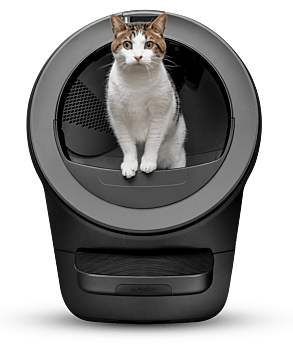
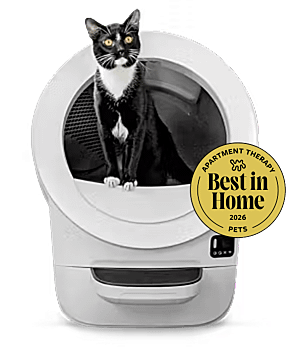
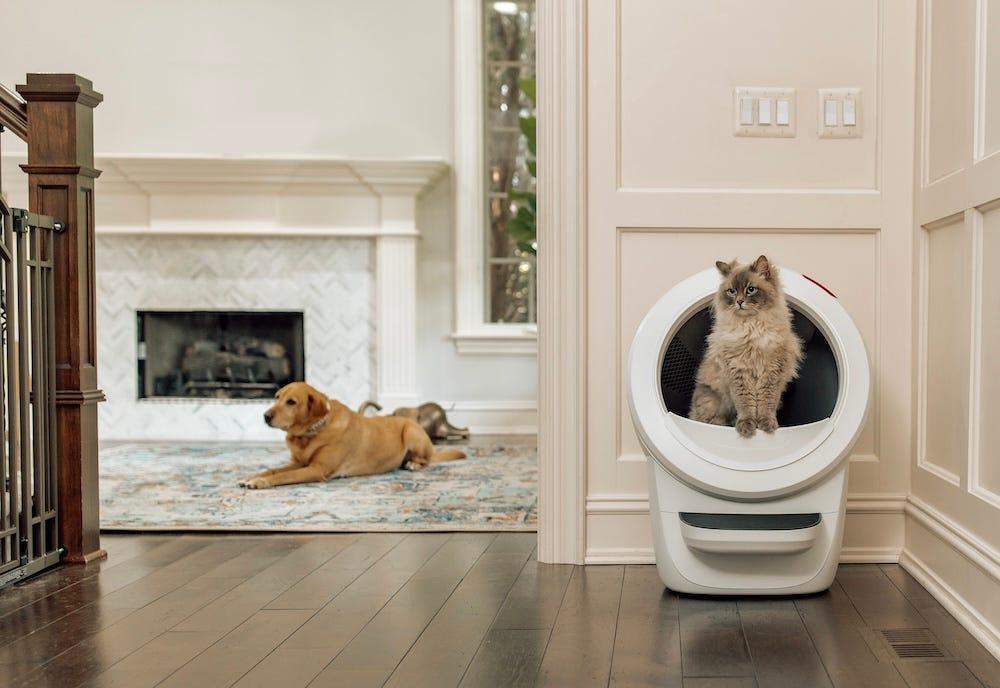
Litter dust is an airway irritant, and dogs that spend time near the litter box, or that have access to it, can develop respiratory irritation that has nothing to do with a true allergy. Low-dust, unscented litter reduces that burden. An automatic litter box helps contain dust and limits the dog's access to the area.
Dogs eating cat feces, called coprophagia, is also common and frequently confused with a food allergy or GI sensitivity. It's a behavioral issue and a health risk because cat feces can carry parasites but it's not an allergic reaction. The behavior has its own set of causes, and dog-proofing the litter box is usually the fastest way to stop it.
Dogs raiding the cat's food bowl is similarly common. Cat food is higher in fat and protein than dog food, and repeated access can cause GI upset that mimics a food sensitivity. Keeping the dog out of cat’s food is worth solving early, before you start chasing a diagnosis that isn’t there.
Is It the Cat, or Is It Fleas the Cat Brought In?
If you have an indoor-outdoor cat, fleas have to be ruled out before anything else.
Cats are efficient groomers and excellent flea hosts. They can carry fleas into the home and distribute eggs into carpet and bedding without showing obvious signs themselves. A dog sharing that environment can develop flea allergy dermatitis from the cat's flea burden, even if the dog was never outside.
One flea bite is enough to trigger weeks of itching in a flea-allergic dog. And like cats, dogs can remove fleas through scratching and grooming, so finding a flea on the dog isn't required for flea allergy to be the diagnosis.
Both pets need year-round flea prevention, and the environment needs treating too. Eggs and larvae live in the home, not on the animal, so clearing fleas out of the house matters as much as what you put on the pets. A reminder worth repeating: never apply a dog flea product to a cat. Many contain permethrin, which is fatal to cats. The products that are safe for cats are a different category entirely.
How a Vet Diagnoses a Cat Allergy in a Dog
There's no single test. Allergies in dogs are diagnosed by exclusion, meaning you systematically rule out the most likely causes before landing on atopy.
Step 1: Strict flea control trial. Every pet in the household is treated consistently for at least a few months. If symptoms improve significantly, fleas were likely driving it.
Step 2: Elimination diet trial. A strict novel protein or hydrolyzed diet for 8 to 12 weeks, with nothing else given, ie no treats, no table scraps, and no flavored medications. This rules out food allergy. It only works if it's truly strict.
Step 3: Atopy. Once fleas and food are ruled out, environmental allergy is on the table. Intradermal skin testing is the gold standard but typically done only by veterinary dermatologists. Serum allergy testing is more widely available but less reliable. Neither is a substitute for steps one and two.
If you've worked through the basics without a clear answer, a referral to a veterinary dermatologist is worth asking about.
What To Do if Your Dog Is Allergic to Cats
Reduce exposure first. It's the cheapest and most durable intervention. Separate sleeping areas, HEPA filtration, frequent vacuuming, and washing bedding weekly all lower the total allergen load. This won't eliminate symptoms in a sensitized dog, but it reduces the burden the immune system is responding to.
Prescription medications. Your vet may discuss options like Cytopoint (lokivetmab), Apoquel (oclacitinib), cyclosporine, or short-course steroids depending on severity and the dog's overall health. These manage symptoms effectively. A note for multi-pet households: never share medications between species. What's appropriate for a dog is not necessarily safe for a cat, and plenty of common medications are outright toxic to them.
Antihistamines. More useful in dogs than in cats, but still limited as a standalone treatment for atopy. They work better for mild or seasonal symptoms than for chronic, year-round allergic itch.
Allergen-specific immunotherapy. Allergy shots or sublingual drops are the only approach that addresses the underlying cause rather than managing symptoms. It takes time, often six to twelve months before full benefit, but for dogs with confirmed atopy, it's the most durable long-term option.
Omega-3 fatty acids and skin barrier support. These reduce inflammation and support the skin's ability to keep allergens out. Not a replacement for medical management, but a reasonable addition.
Secondary infections. Dogs with chronic allergic skin disease frequently develop secondary bacterial or yeast infections that drive much of the discomfort. These need direct treatment. The allergy management won't clear an active infection on its own.
How To Reduce Cat Allergens in a Multi-Pet Home
Groom the cat regularly. Brushing removes loose dander and hair at the source before it distributes through the house; there are several brush types depending on your cat's coat. If your cat has dandruff, managing it lowers the allergen load too.
HEPA filtration and vacuuming. A HEPA air purifier in shared spaces makes a real difference. Vacuum high-traffic areas several times a week with a HEPA-filter vacuum.
Wash bedding weekly in hot water. Fel d 1 builds up fast in fabric. Frequent washing is one of the most effective environmental interventions.
Low-dust, unscented litter. Reduces airway irritation for both pets and limits litter tracking through the house.
Separate sleeping areas. Give the cat spaces the dog doesn't access, and give the dog areas where allergen load stays lower.
Keep the dog from licking or grooming the cat. Direct contact is a significant source of exposure. It's cute until your dog is itching for two weeks.
Do You Have To Rehome the Cat?
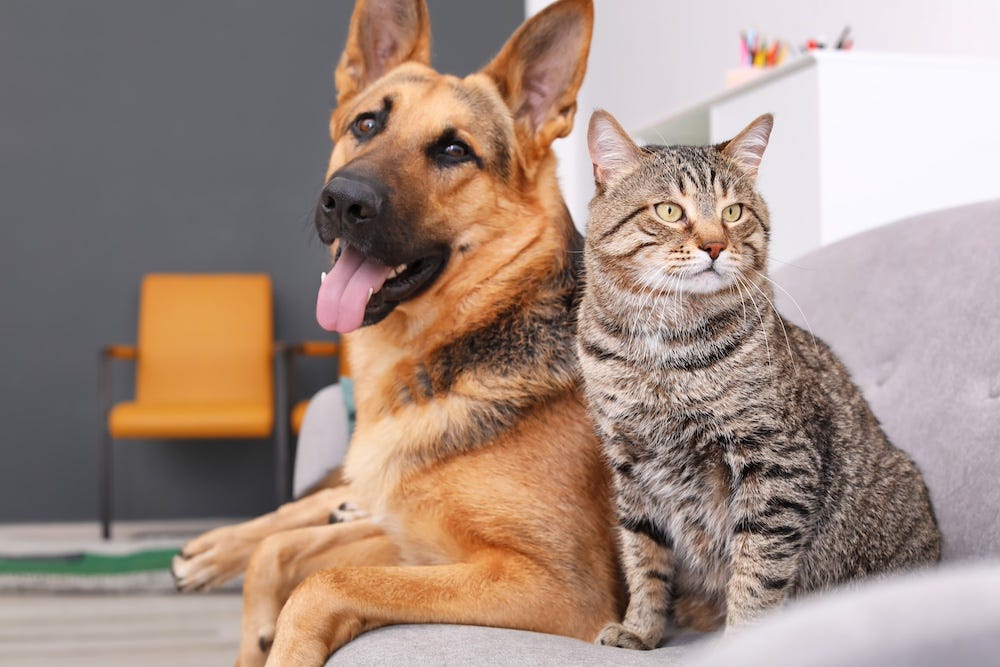
Almost always no.
Well-managed atopy in dogs looks like: consistent flea prevention year-round, a stable medication or immunotherapy plan, a clean low-allergen home environment, and regular vet follow-up to catch secondary infections early. It's ongoing, but it's manageable for most families.
The narrow circumstances where a vet might raise rehoming are severe, uncontrolled disease that significantly affects the dog's quality of life despite exhausting all reasonable options. That's the exception, not the rule.
For households still in the process of choosing a cat, some breeds produce less Fel d 1 than others. Siberian and Balinese cats are among the most commonly cited. No cat is truly hypoallergenic because the protein is still present, but lower-producing breeds may cause less reaction in a sensitive dog.
Introducing a Cat to a Dog With Known Allergies
If your dog has a history of environmental allergies and you're adding a cat, slow introductions with built-in separate spaces from day one give you the best chance of a smooth outcome.
Establish the routine before the allergy management becomes urgent. Set up the litter box in a dog-free area, get the cat settled in their own space, and watch for early skin and ear signs in the dog during the first few weeks. Catching a reaction early is a lot easier to manage than addressing it after it's been building for months.
When To Call the Vet
Most allergy symptoms develop gradually and can be addressed at a regular appointment. A few situations need faster attention:
-
Facial swelling, hives, or sudden collapse need to be treated as an emergency
-
Labored breathing or persistent wheezing
-
Open sores, bleeding, or visibly infected skin from scratching
-
Ear infections that keep returning after treatment
-
Sudden severe itching with no obvious cause
Breathing changes and facial swelling especially. Don't wait on those.
The bottom line: dogs can be allergic to cats, but it's less common than flea allergy or environmental atopy from other sources. Rule out fleas first, work through the elimination steps with your vet, and know that most dogs with confirmed cat allergies can be managed well without anyone losing their home.