



Can cats and dogs get along? Yes, but learning how to introduce a scared cat to a dog requires a much slower, more structured plan than introducing a confident pet. While some pets become comfortable around each other within a couple of weeks, it's completely normal for the process to take several weeks or even a few months if your cat is fearful.
The goal isn't to make your pets best friends overnight. It's to help them feel safe sharing the same home. By moving at your cat's pace and creating positive experiences along the way, you can give both pets the best chance of building a peaceful relationship.
If you're bringing a dog into a cat household (or vice versa), planning ahead can make the transition much smoother.
In this article
- First, is this a good match?
- Why are cats scared of dogs?
- How to tell if your cat is scared
- Before the introduction: Set up for success
- How to introduce a cat to a dog: Step by step
- How long does it take to introduce a cat to a dog?
- Troubleshooting: What if things aren't going well?
- Special scenarios
- Keeping the peace long-term
- FAQs
First, is this a good match?
Before introducing a cat and dog, consider whether they're likely to be compatible. Personality matters far more than breed, but breed tendencies can still influence how quickly introductions progress.
Dogs with a lower prey drive and calmer temperaments (such as Golden Retrievers, Cavalier King Charles Spaniels, and Labrador Retrievers) often adjust more easily to living with cats than breeds originally developed to chase small animals, including many terriers and scent hounds.
Your cat's personality is just as important. Confident, curious cats often recover from new experiences more quickly, while shy cats or those with a history of trauma may need considerably more time.
Age also plays a role. Puppies and kittens tend to adapt more easily because they're still learning about the world, but their enthusiasm can also overwhelm the other pet if interactions aren't carefully managed.
Why are cats scared of dogs?
Understanding why your cat feels nervous helps you respond with patience instead of trying to rush the process.
Instinct
Cats are both predators and prey. A large, unfamiliar animal rushing toward them naturally triggers caution, even if the dog means no harm.
Bad past experiences
A cat that's been chased, cornered, or frightened by a dog before may expect the same thing to happen again. Building trust after a negative experience often takes extra time.
They speak different languages
Dogs often greet by running forward, wagging, sniffing, or staring. Cats may interpret those behaviors as threatening. Likewise, a cat's hiss or swat can make an excited dog even more interested.
Size, speed, and energy
Even friendly dogs can be intimidating simply because they're bigger, louder, and move differently than cats.
Limited socialization
Cats that never met dogs during kittenhood may need longer to adjust to sharing their space with one.
If your cat already has anxiety around other animals or new situations, it's worth addressing that stress before introductions begin.
How to tell if your cat is scared
A frightened cat communicates with body language long before becoming aggressive.
Watch for:
- Flattened or pinned-back ears
- Dilated pupils
- Puffed-up fur
- Crouching low to the ground
- An arched back or sideways posture
- Tail tucked tightly or lashing
- Hissing, growling, or yowling
- Freezing in place
- Running away or hiding
Pay attention to your dog, too. Signs you're moving too quickly include:
- Intense staring
- A stiff, motionless posture
- Barking or whining continuously
- Lunging toward the cat
- Constant attempts to chase
If your dog becomes fixated on the cat, don't continue the session. Separate them and return to an earlier step where both animals can stay relaxed.
Before the introduction: Set up for success
Setting up your home before a new pet arrives makes introductions much less stressful for everyone.
Create a safe room
Before your pets ever see each other, give your cat one room that's entirely theirs.
Include:
- Food and water
- A litter box
- Comfortable bedding
- Hiding places
- Vertical climbing options
- Toys and scratching surfaces
Your cat should always be able to retreat to this space without being followed by the dog.
Dog-proof the litter box
Nothing undermines a cat's confidence faster than a dog invading the litter box.
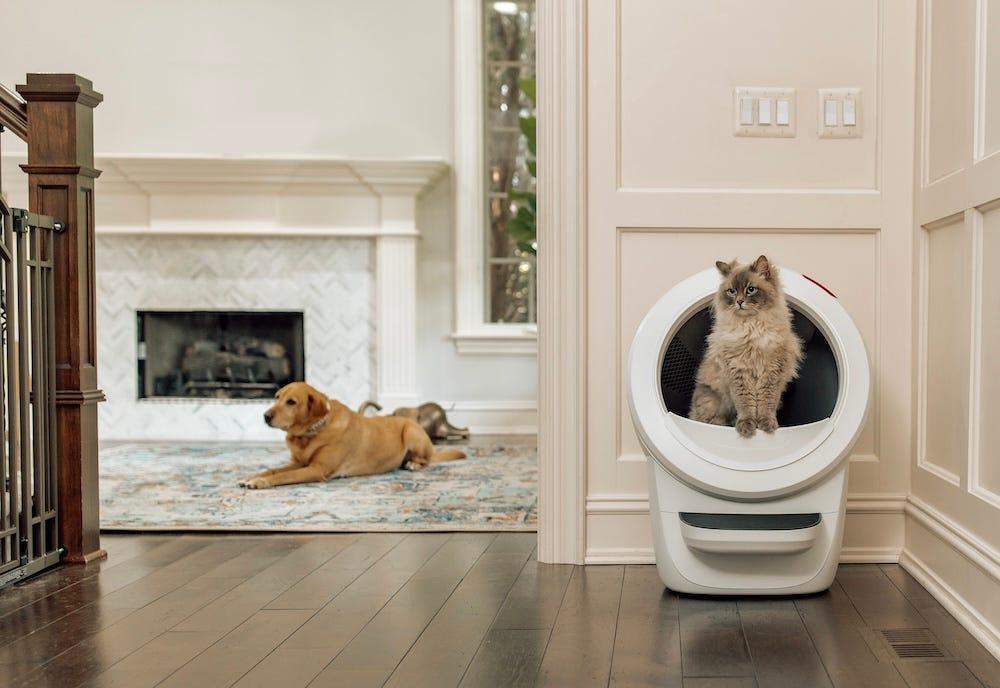
Maintain a dog proof litter box setup inside the cat's safe room during introductions to keep dogs out of the litter box and protect your cat's sense of security. Consider an enclosed litter area or a location behind a baby gate.
A self-cleaning litter box can also help by moving waste into a sealed drawer, reducing odors that may attract curious dogs while making daily maintenance easier.
Give your cat vertical escape routes
Cats feel safest when they can observe from above. Cat trees, sturdy shelves, window perches, or tall furniture give your cat a way to leave an interaction without feeling trapped.
Consider calming aids
If your cat is already anxious, feline pheromone diffusers or veterinarian-recommended calming supplements may help create a more relaxed environment. They're most effective when paired with gradual training, not as a replacement for it.
How to introduce a cat to a dog: Step by step
Every introduction should move at the pace of the more nervous pet. If either animal becomes stressed, simply return to the previous successful step for a few days before trying again.
Step 1: Scent swapping
Before your pets meet face to face, let them become familiar with each other's scent. Exchange blankets or bedding, gently rub each pet with a separate soft cloth, then place that cloth near the other animal's resting area.
You can even place treats on or near the other pet's blanket to help build a positive association with the unfamiliar smell. Stay at this stage until neither pet seems bothered by the other's scent.
Step 2: Let them hear each other
Once scent swapping goes well, allow your pets to hear, but not see, each other.
Feed them on opposite sides of a closed door, starting several feet away and gradually moving their bowls closer over several days. If either pet stops eating, becomes tense, or vocalizes excessively, move the bowls farther apart and slow down.
For scared cats, spending extra time at this stage often pays off later.
Step 3: Introduce visual contact
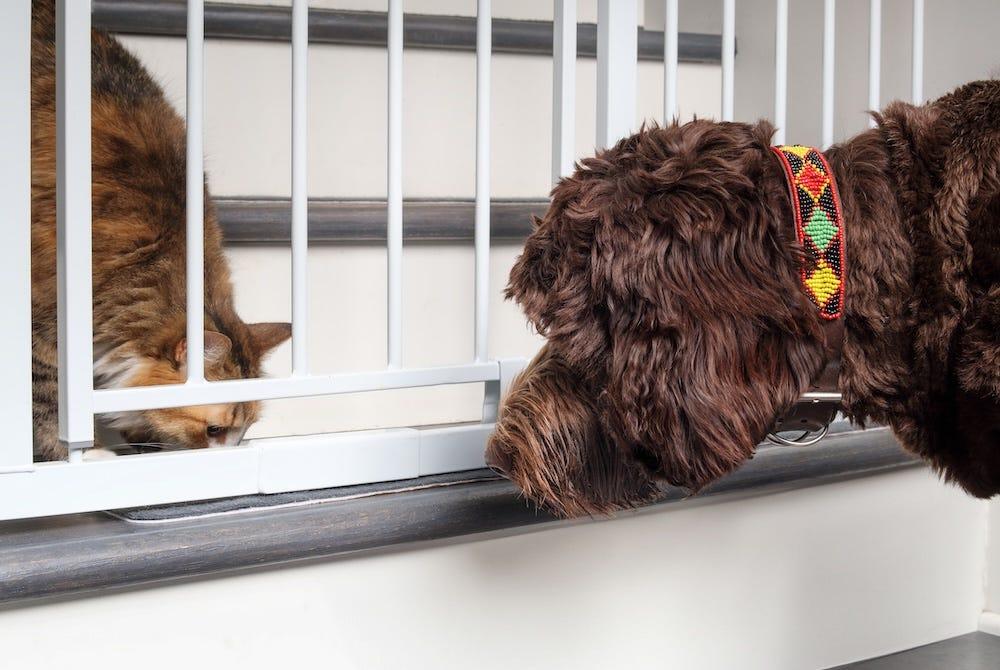
The next step is letting your pets see each other through a baby gate, screen door, or slightly opened door. For especially fearful cats, partially cover the gate with a towel at first so they can choose how much they want to see.
Keep these sessions brief, just a few minutes. Reward calm behavior from both pets with praise or treats.
If your cat hides, freezes, or starts hissing, end the session before their stress escalates. That's simply a sign they need more time.
Step 4: First face-to-face meeting
When both pets stay relaxed during visual introductions, it's time for a supervised meeting.
Keep your dog on a leash while allowing your cat to move freely. Never carry your cat toward the dog or encourage them to "say hello." Let the cat decide whether to approach. Reward both animals whenever they remain calm around each other.
End the session while things are still going well. Short, successful interactions build confidence much faster than long, stressful ones.
Step 5: Supervised freedom
As your dog consistently ignores the cat or responds calmly to cues, you can allow them to drag a lightweight leash during supervised interactions. This gives you a way to intervene quickly if excitement builds without constantly holding the leash.
Continue providing escape routes and access to the cat's safe room.
Step 6: Calm coexistence
The final goal isn't constant interaction, it's peaceful coexistence. Many cats and dogs eventually ignore each other most of the day, occasionally sharing a room or resting nearby. That's a successful introduction.
Continue supervising interactions for at least several weeks before leaving them together unsupervised. Many behavior experts recommend waiting around a month after consistently calm interactions before giving pets unrestricted access when you're away.
Remember that progress isn't always linear. A stressful event or an overly exciting interaction may mean taking a temporary step backward. That's completely normal.
How long does it take to introduce a cat to a dog?
Every cat and dog is different, so there's no universal timeline. The key is to move at the pace of the more anxious pet.
Here's what you can generally expect:
- Best case: A few days to two weeks for a relaxed cat and calm, well-socialized dog.
- Typical: Two to six weeks of gradual introductions.
- Scared or fearful cats: Two to three months, or longer, is completely normal.
It's tempting to speed things up after a few successful meetings, but doing so can backfire. One frightening interaction can undo weeks of progress. If either pet becomes stressed, simply return to the last step where both animals were comfortable before trying again.
Troubleshooting: What if things aren't going well?
Even with careful introductions, it's common to hit a few bumps along the way.
My dog is obsessed with the cat
If your dog constantly stares, whines, lunges, or tries to chase the cat, don't assume they'll "work it out."
Learning how to stop a dog from chasing a cat starts with stepping back to scent-only interactions and focusing on rewarding your dog for calmly noticing the cat without reacting. Positive reinforcement exercises (such as teaching your dog to look at you instead of the cat) can help redirect their attention.
Dogs with a strong prey drive often need additional training before they're ready for closer interactions.
My cat won't come out of hiding
A frightened cat may spend days or even weeks staying mostly in their safe room. Don't drag them out or force interactions.
Instead:
- Let the cat decide when to explore
- Continue scent swapping
- Keep feeding and play routines consistent
- Make sure the dog can't enter the safe room
Many shy cats gain confidence once they realize the dog isn't chasing or invading their space.
There was a chase or a swat
Mistakes happen. If your dog chases the cat or your cat swats at the dog, calmly separate them without yelling or punishing either pet.
Then take several steps back in the introduction process. Spend a few days rebuilding positive experiences before attempting another face-to-face meeting. One bad interaction doesn't mean they'll never get along, it simply means they weren't ready for the next step yet.
When to get professional help
Consider consulting your vet or a qualified animal behavior professional if:
- Either pet repeatedly tries to attack the other
- Your dog can't disengage from staring or chasing
- Your cat stops eating or using the litter box
- Hiding, aggression, or fear continues despite slow introductions
- You're concerned someone could get injured
Getting help early is often easier than trying to correct a deeply established pattern later. If introductions genuinely aren't working even with help, rehoming the cat to a dog-free home may be the safest answer for everyone involved.
Special scenarios
There are some specific situations when introducing new pets to each other where the steps may look a little different.
Introducing a puppy to a resident cat
Puppies are often excited about everything, including cats. Even if a puppy is friendly, jumping, barking, and playful chasing can overwhelm a cat.
Keep your puppy on a leash during introductions and focus on teaching calm behaviors like "sit," "stay," and "leave it." Baby gates and exercise pens can help everyone adjust safely while your puppy learns impulse control.
How to introduce a kitten to a dog
When learning how to introduce a kitten to a dog, keep in mind that kittens often have the opposite problem: they're curious enough to approach a dog without recognizing potential danger.
Never assume a gentle dog is automatically safe around a tiny kitten. Keep all interactions supervised, and make sure your kitten always has a quick escape route. Because kittens tire easily, keep introduction sessions short and positive.
Introducing a dog into a multi-cat home
If you already have multiple cats, don't introduce the dog to everyone at once. Instead, let the dog meet each cat individually while the others remain in a separate area.
Some cats will adjust quickly, while others need considerably more time. Moving at each cat's comfort level usually leads to better long-term success than expecting the entire household to progress together.
Keeping the peace long-term
Even after introductions are complete, a few simple habits can help keep everyone happy.
Keep feeding areas separate
Many dogs enjoy sampling cat food, while many cats prefer to eat without being watched. Separate feeding stations reduce competition and help both pets feel secure during meals.
Give your cat a dog-free space
Even households where pets get along benefit from having at least one area that's always off-limits to the dog. Whether it's a bedroom, office, or a tall cat tree, having a guaranteed retreat helps cats feel more confident throughout the home.
Protect the litter box
The litter box should remain a private space. If your dog raids the litter box or regularly follows your cat inside, your cat may become reluctant to use it.
Keeping the litter box inaccessible to dogs and scooping it regularly, or using a self-cleaning litter box, helps maintain good litter box habits while reducing household stress.
Continue rewarding calm behavior
Introductions don't end once your pets tolerate each other. Whenever you see your dog calmly ignoring the cat or your cat comfortably sharing the room, offer praise, treats, or another reward.
Those positive experiences continue strengthening their relationship over time.
Watch for ongoing stress
Even pets that seem to adjust well can become stressed if routines change. Keep an eye out for signs like:
- Increased hiding
- Overgrooming
- Litter box accidents
- Appetite changes
- Frequent chasing
- Growling or hissing that becomes more common
FAQs
How long does it take to introduce a cat to a dog?
It varies. Some calm, social pets adjust within a couple of weeks, while fearful cats often need two to three months or longer. Always move at the pace of the more anxious animal rather than following a strict timeline.
What should I do if my cat hisses at my dog?
Hissing is your cat's way of asking for more space. Don't punish the behavior or force another interaction. End the session, separate your pets, and return to an earlier introduction step until both animals are more comfortable.
Can a dog and a scared cat ever get along?
Yes. Many initially fearful cats eventually learn to coexist peacefully with dogs when introductions are slow, predictable, and based on positive experiences. The goal isn't necessarily friendship, it's helping both pets feel safe sharing the same home.
Should I let my cat and dog meet right away?
No. Letting pets "figure it out" can create fear and make introductions much more difficult. Start with scent swapping and gradually work toward supervised face-to-face meetings instead.
What if my dog chases my cat?
Separate them immediately without punishment. Chasing usually means your dog became overstimulated or the introduction moved too quickly. Return to an earlier step and continue rewarding calm behavior before trying another meeting.
How do I know the introduction is going well?
Positive signs include:
- Your cat explores instead of hiding
- Your dog can look away from the cat when asked
- Both pets eat, play, and relax normally
- Neither animal fixates on the other
- They can share the same room without signs of stress
Remember, peaceful coexistence is a success. Many cats and dogs become comfortable roommates even if they never cuddle together.