



Bringing home a cat costs more than just the adoption fee. Your budget needs to account for initial supplies, food, litter, routine vet care, and the possibility of unexpected medical expenses.
You don't need to predict every expense perfectly. A realistic cat-care budget gives you a better idea of what to expect each month and helps you prepare for bigger costs down the road.
The ASPCA estimates that a new cat can cost about $1,904 in the first year and around $1,149 in each following year, although actual costs vary based on where you live, your cat's age and health, and the choices you make.
In this article
- How much does it cost to adopt a cat?
- Average cost of owning a cat: monthly and annual budget
- How much does a cat cost per month?
- Vet care costs to budget for every year
- How much is pet insurance for a cat?
- Pet insurance vs. an emergency fund: which fits your budget?
- The hidden costs of cat ownership people forget
- How to budget smarter without cutting corners on care
- Where convenience products can help your long-term budget
How much does it cost to adopt a cat?
The answer depends heavily on where you get your cat and what they need.
Adopting from a shelter or rescue is typically less expensive upfront than purchasing a cat from a breeder. Adoption fees will sometimes cover initial vet services, such as vaccines, microchipping, or spaying or neutering, but you'll still need to budget for supplies and ongoing care.
If you're purchasing a specific breed, the initial cost can be substantially higher. Popular or less common breeds may cost hundreds or even thousands of dollars from a breeder.
But the initial purchase price is only one piece of the puzzle. A better way to think about affordability is how much you'll spend caring for your cat over their lifetime.
Average cost of owning a cat: monthly and annual budget
|
Expense category |
Typical timing |
Budgeting considerations |
|
Adoption or purchase |
One-time |
Shelter adoption fees are generally lower than breeder prices |
|
Supplies and setup |
One-time |
Carrier, litter box, food and water bowls, scratching posts, bedding, toys |
|
Food |
Monthly |
Depends on diet, food type, brand, and your cat's size |
|
Litter |
Monthly |
Depends on litter type, box size, and number of boxes |
|
Pet insurance |
Monthly |
Premiums vary by age, location, deductible, and coverage |
|
Emergency fund |
Monthly savings goal |
Build a dedicated "rainy day fund” for unexpected vet expenses |
|
Routine Vet visit |
Annual/semi-annual |
Exam fees plus any vaccines, testing, and other recommended care |
|
Routine Diagnostics |
Every 6 to 12 months |
Routine diagnostics can include baseline blood work like a complete blood cell count paired with internal organ function and electrolytes. |
|
Vaccines / preventive care |
Annual |
Costs vary based on your cat's lifestyle and vet recommendations |
|
Dental Care |
Daily | Every 1 to 2 years | Occasional / increasing with age |
Ideal routine dental care for cats includes daily teeth brushing along with using dental chews and water additives. Cats should generally have their teeth cleaned professionally by a veterinarian every 1 to 2 years. Costs of dental care can increase as cats age. |
|
Age-related care |
Every 3 to 6 months |
As cats age, some may develop common medical issues like hyperthyroidism, kidney disease, or arthritis that may require more frequent vet visits, daily medications, prescription diets, etc to help maintain their health and quality of life. |
Rather than treating all of these as monthly bills, divide one-time and annual expenses into monthly savings goals. That way, a $300 vet bill or annual insurance renewal doesn't come as a surprise.
How much does a cat cost per month?
Your recurring cat expenses will usually include:
- Food – $25 to $90
- Litter – $15 to $40
- Treats and toys – $5 to $15
- Parasite prevention – $10 to $20
- Grooming or other routine maintenance – $20 to $50
- Pet insurance or emergency savings – $15 to $75
TOTAL MONTHLY CAT BUDGET COST: $90 to $250
For many households, food and litter will make up the bulk of regular spending. However, don't forget to set aside money for expenses that don't happen every month.
A simple approach is to calculate your regular monthly costs and then add a separate amount for vet care and emergencies. That gives you a more realistic picture than budgeting only for food and litter.
Vet care costs to budget for every year
Routine vet care is one of the most important categories in your cat-care budget. But how much does a vet visit cost?
There's no single answer. Estimates vary depending on location and what's included in the appointment.
MetLife cites a range of roughly $25 to $186 for an average cat vet visit, while ConsumerAffairs, citing American Veterinary Medical Association data, reports an average 2024 vet visit cost of $138 for cats.
Those numbers show why it's important to look at what a "vet visit" actually includes. A basic exam isn't necessarily the same price as an exam that includes vaccines, bloodwork, fecal testing, medication, or diagnostic imaging.
Plan for expenses such as:
- Annual or twice-yearly wellness exams
- Recommended vaccines
- Parasite testing or prevention
- Dental care
- Bloodwork or other diagnostics as your cat ages
- Medications when needed
- Additional monitoring for senior cats
Preventive care may feel like another expense, but finding health problems earlier can make them easier to manage and potentially prevent more serious complications.
TOTAL AVERAGE YEARLY COST: $1,000 to $3,000
How much is an emergency vet visit?
Emergency vet care is where even a carefully planned budget can get stretched.
An emergency exam alone can cost substantially more than a routine appointment. Add diagnostic testing, hospitalization, medication, or surgery, and the bill can quickly reach thousands of dollars.
For example, MetLife reports that emergency vet visits can cost $1,750 or more, while major emergencies and surgeries can exceed $5,000. These are examples rather than universal prices, but they demonstrate why an emergency plan matters.
How much should you budget for emergencies?
There's no magic emergency-fund number that works for every household. A reasonable goal is to build enough savings to cover a significant unexpected vet bill without putting it on a high-interest credit card.
If you can't comfortably save a large cash reserve, pet insurance can provide another layer of protection. The important part is having a plan before an emergency happens.
How much is pet insurance for a cat?
The pet insurance cost for a cat varies based on several factors, including age, breed, location, deductible, reimbursement rate, annual limit, and coverage. Dr.Laria Herod recommends that every pet parent should invest in pet insurance for their new feline family members as soon as they get them.
Forbes Advisor estimates that cat insurance averages about $23 per month for a policy with a $5,000 annual coverage limit, $250 deductible, and 80% reimbursement. Unlimited annual coverage averages about $34 per month in its analysis.
Your actual quote could be higher or lower. Older cats, certain locations, and more comprehensive coverage can increase premiums.
When comparing policies, don't look at the monthly premium alone. Check:
- Annual deductible
- Reimbursement percentage
- Annual coverage limit
- Whether hereditary or congenital conditions are covered
- Waiting periods
- Exclusions and preexisting-condition rules
Pet insurance costs by cat age
Age can have a significant effect on insurance premiums. Younger cats generally cost less to insure than older cats, and coverage may become more expensive as your cat ages.
That's one reason why it's worth researching insurance early rather than waiting until your cat develops a medical condition. Most pet insurance policies don't cover preexisting conditions.
Pet insurance vs. an emergency fund: which fits your budget?
There's no universal winner between pet insurance and an emergency fund.
Insurance can make a large, unexpected vet bill more manageable by covering eligible expenses after you meet the deductible and other policy requirements. An emergency fund gives you immediate cash and doesn't come with insurance exclusions or reimbursement rules.
Some cat parents choose to do both: maintain insurance while also keeping a smaller cash reserve for deductibles, uncovered expenses, or routine care. The right choice depends on your finances and how comfortable you are taking on the risk of a major unexpected bill. Many veterinary clinics also offer preventative care plans too; so it’s important to thorough research what your plan, insurance or preventative care, includes to avoid costly, frustrating interactions when you’d prefer to be focusing on caring for your kitty.
The hidden costs of cat ownership people forget
Food, litter, and vet care are the obvious expenses. But several smaller costs can add up. Don't forget to budget for:
- A carrier
- Scratching posts and replacement scratchers
- Litter mats and other litter accessories
- Boarding or pet sitting when you travel
- Special or prescription diets
- Dental cleanings
- Medications
- Additional vet testing
- Replacement beds, toys, and bowls
- Senior-cat care
You don't necessarily need to buy everything at once. Some items can be purchased as needed, especially if you're starting with a healthy adult cat. Also reminding yourself that not all products are made to last forever; so it is reasonable to plan to need to update or update bedding, posts, toys, etc over time.

How to budget smarter without cutting corners on care
A good budget isn't about choosing the cheapest option every time. It's about spending intentionally and preparing for predictable expenses.
Start by buying your essential supplies before your cat comes home. Then estimate your monthly food and litter costs and create a separate sinking fund for veterinary care.
A few other strategies can help:
- Ask your vet about the preventive care your cat actually needs based on their age and lifestyle.
- Price routine vet services before you need them.
- Compare pet insurance policies based on total coverage, not just premiums.
- Set aside a small amount each month for unexpected expenses.
- Replace supplies when they're worn out rather than automatically upgrading them.
- Look for ways to reduce recurring waste in categories such as food and litter.
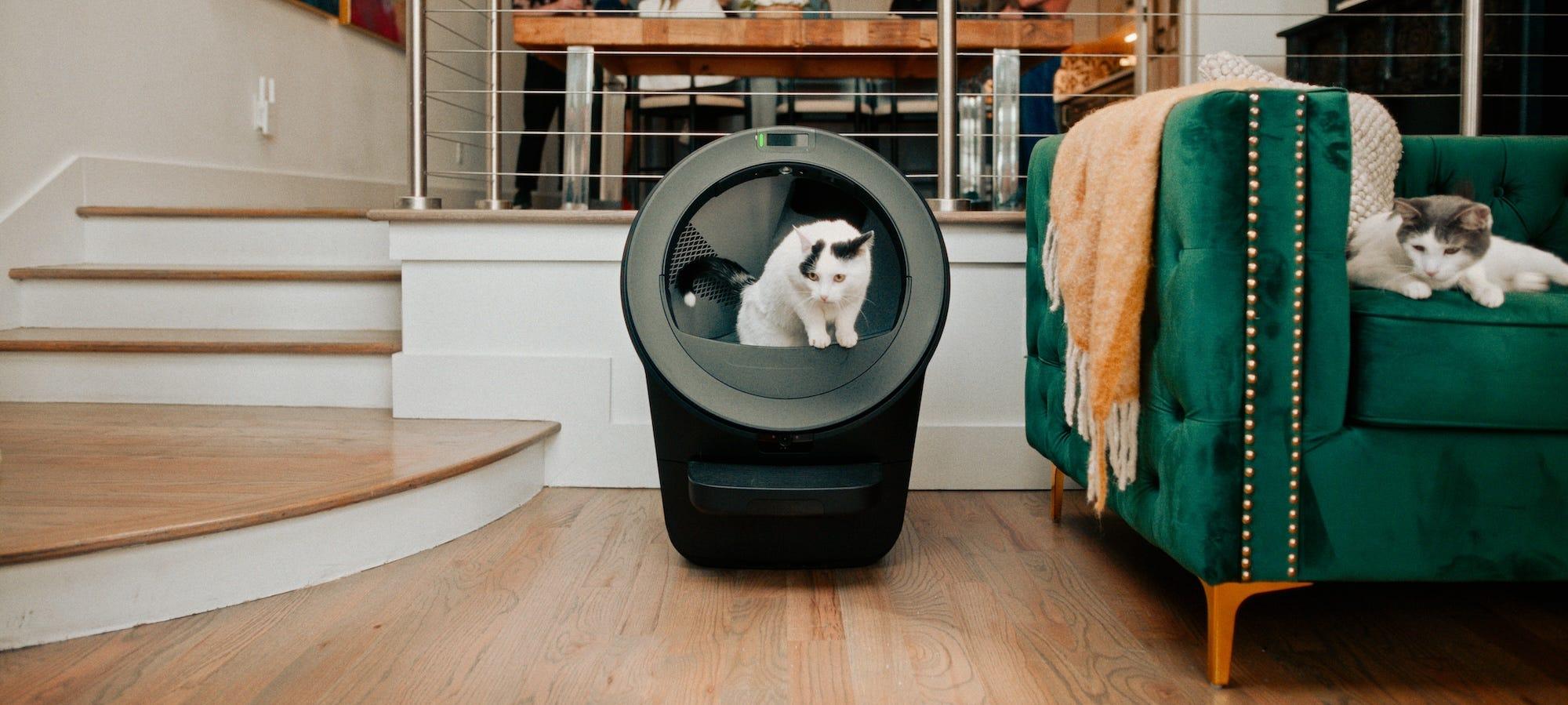
Convenience products, like a self-cleaning litter box or automatic cat feeder, can also be worth considering when they genuinely reduce waste or ongoing work.
Where convenience products can help your long-term budget
An expensive product isn't necessarily a bad budget decision if it solves a recurring problem.
For example, a self-cleaning litter box has a higher upfront cost than a traditional litter box. But for some households, the convenience, reduced scooping, and more consistent litter maintenance may make the investment worthwhile over time.
The same principle applies to other pet products: consider upfront price, expected lifespan, recurring costs, and the amount of work the product saves.