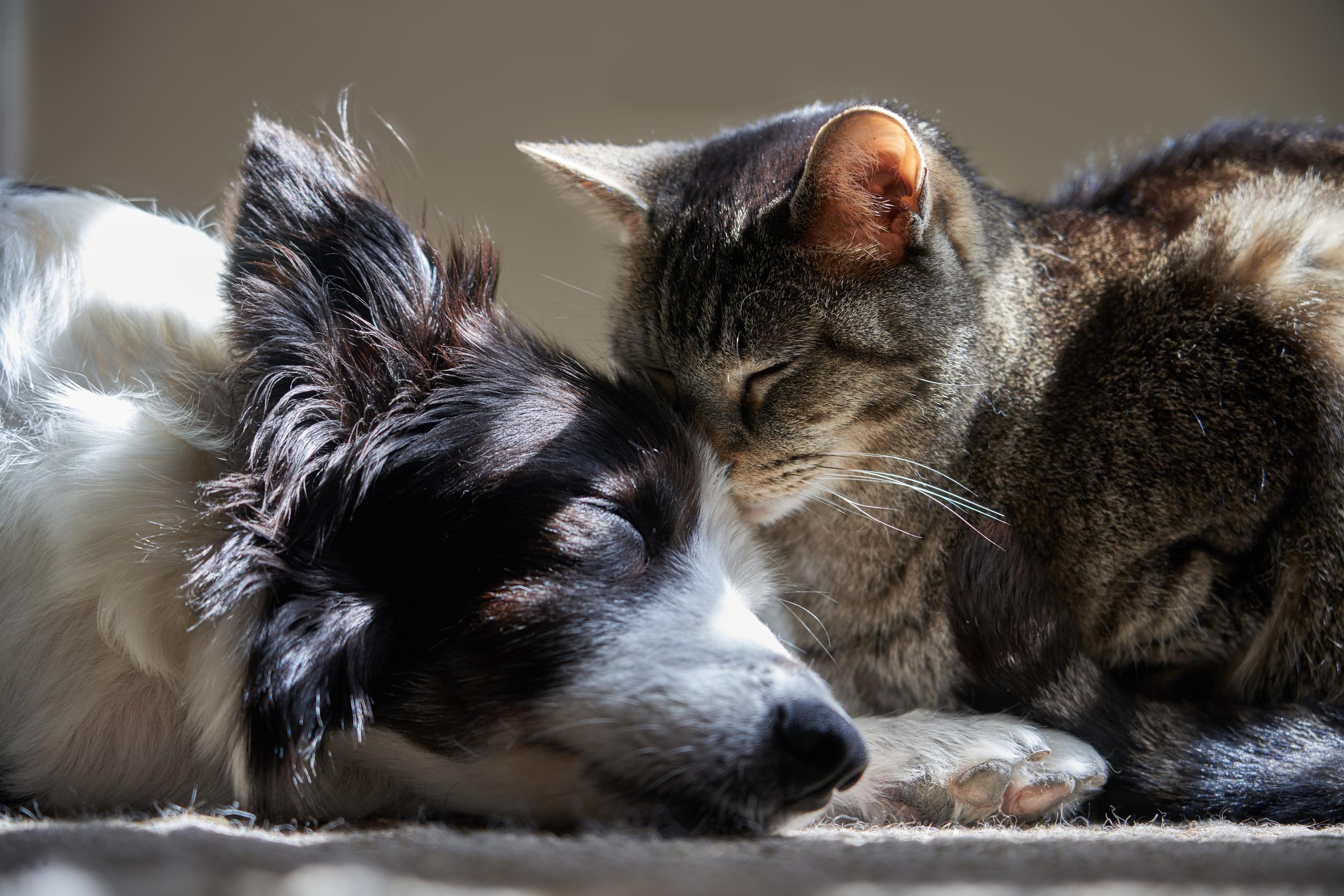


Some cats and dogs coexist peacefully for years. Others seem to trigger something in each other, and when your cat starts itching, sneezing, or overgrooming after a new dog joins the household, it's easy to assume the dog is the problem.
Sometimes it is. More often, the situation is more complicated. This article covers what cats are actually allergic to, how to tell if the dog is genuinely the trigger, and what to do about it either way.
In this article
- Can Cats Be Allergic to Dogs? The Short Answer
- What Are Cats Allergic To?
- Signs Your Cat May Be Allergic to Your Dog
- What Else Looks Like a Dog Allergy (Rule These Out First)
- Is It a Dog Allergy or Flea Allergy Dermatitis?
- How a Vet Diagnoses Allergies in Cats
- Treatment and Management if the Dog Is the Trigger
- Living in a Multi-Pet Home Without Rehoming the Dog
- Can Dogs Be Allergic to Cats?
- When to Call the Vet
Can Cats Be Allergic to Dogs? The Short Answer
Yes, but true dog allergies in cats are uncommon. When it does happen, the cat isn't reacting to dog fur itself. The actual culprit is proteins found in dog dander, saliva, and skin oils. Fur just carries those proteins around.
This type of reaction falls under environmental allergy, also called atopy, rather than being its own distinct diagnosis. And here's the thing worth knowing upfront: dogs are more often the delivery system for other allergens than the allergen themselves. A dog that spends time outside tracks pollen, mold spores, and sometimes fleas into the house. Any of those can trigger a reaction in a sensitive cat, even if the dog's own dander isn't the issue.
For a broader overview, this article on allergies in cats is a good starting point.
What Are Cats Allergic To?
Allergies in cats fall into a few categories:
|
Allergy Type |
Common Triggers |
Typical Signs |
How a Vet Diagnoses It |
|
Environmental (atopy) |
Pollen, dust mites, mold, animal dander |
Itching, skin changes, sneezing |
Diagnosis of exclusion; allergy testing in some cases |
|
Flea allergy dermatitis |
Flea saliva |
Intense itching, scabs, hair loss near tail base |
Flea control trial; finding fleas or flea dirt |
|
Food allergy |
Protein source (chicken, beef, fish) |
Itching, GI signs, skin changes |
Strict elimination diet trial (8-12 weeks) |
|
Contact irritants |
Litter dust, fragrances, cleaning products, plastic bowls |
Localized skin irritation |
History and elimination |
Flea allergy dermatitis is by far the most common allergy in cats. It's worth ruling out before anything else. Common causes of skin disease in cats covers the full picture.
Signs Your Cat May Be Allergic to Your Dog
Allergy signs can sometimes look the same regardless of the trigger. Symptoms alone can't tell you whether the dog is the cause. That's what makes this tricky.
What to watch for:
-
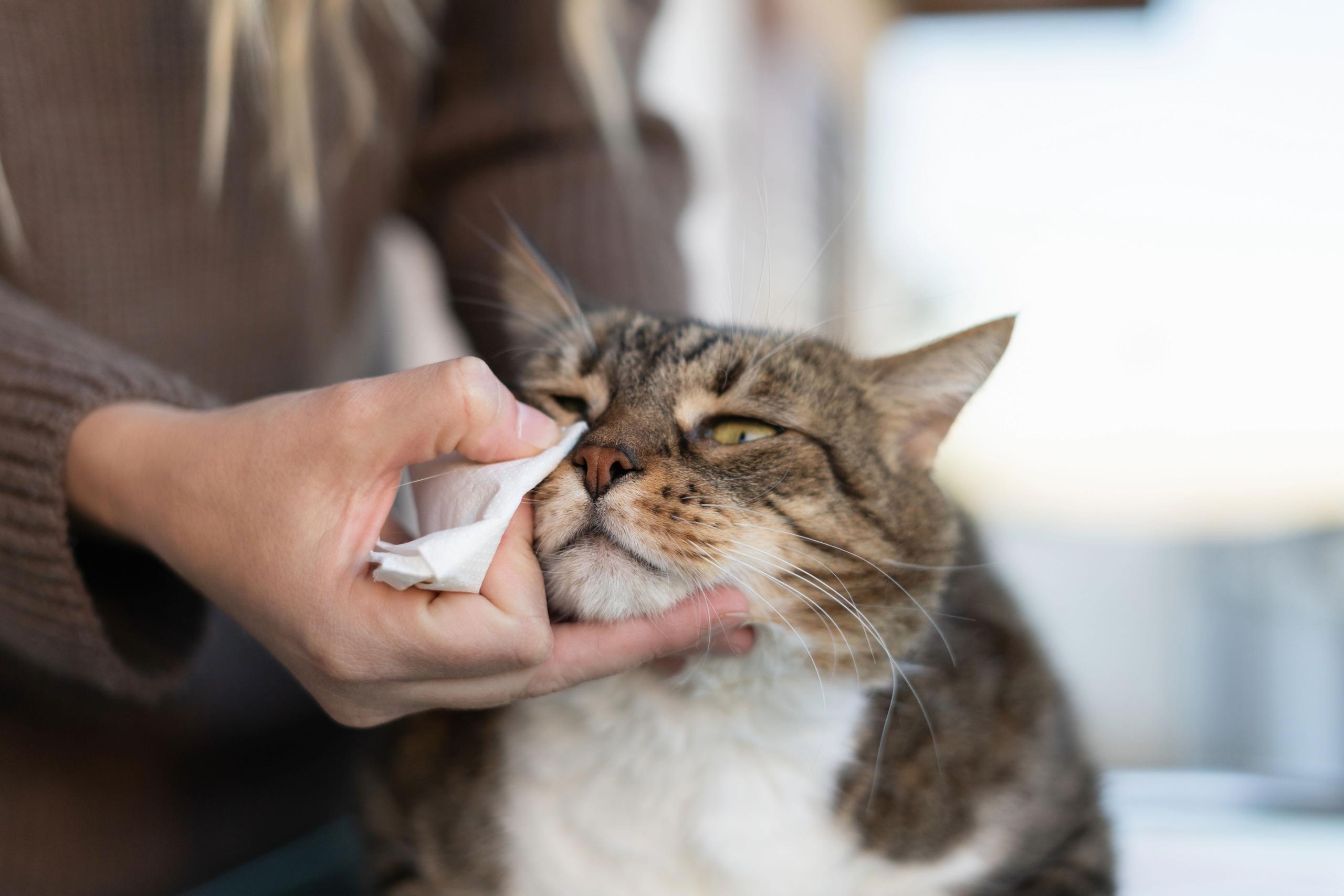
Itching, scratching, and overgrooming, especially around the head, neck, and face
-
Skin changes: miliary dermatitis (tiny scabs that feel like sandpaper), bald patches, raw or broken skin
-
Respiratory signs: sneezing, coughing, wheezing
-
Watery eyes or recurring ear infections
If your cat is losing hair or grooming obsessively, this article on overgrooming and this one on hair loss are worth reading. The timing matters too. If symptoms started or worsened when the dog arrived, that's relevant history to bring to your vet.
What Else Looks Like a Dog Allergy (Rule These Out First)
Before landing on the dog as the cause, a few other things deserve consideration.
Fleas the dog brought inside. This is the most common one. A dog that goes outdoors can introduce fleas into a household where the cat was previously unexposed. Even one flea bite can trigger weeks of itching in an allergic cat.
Upper respiratory infection. Sneezing and watery eyes in a cat are more often infectious than allergic, especially in a multi-pet home.
Feline asthma. Coughing and wheezing can look like an allergic response to a new pet, but asthma has its own diagnosis and management.
Ringworm, ear mites, and other parasites. These cause skin and ear changes that can easily be mistaken for allergy.
Stress. A new dog in the home is a significant disruption for a cat. Stress-related overgrooming and behavioral changes are common and don't involve the immune system at all. The treatment is very different.
Food allergy. If the diet changed around the same time the dog arrived, food can't be ruled out without a proper trial.
More on sneezing and coughing: frequent cat sneezing and why cats cough
Is It a Dog Allergy or Flea Allergy Dermatitis?
Flea allergy dermatitis is triggered by flea saliva, and a single bite can set off weeks of intense itching in a sensitized cat. The catch is that you may never see a flea. Cats groom so efficiently they often remove all evidence before you have a chance to find it or it hides in their fur.
If a dog recently joined the household, and that dog spends any time outdoors, fleas are the first thing to rule out.
Treating just the cat isn't enough. Both pets need year-round flea prevention, and the environment needs to be treated as well. Eggs and larvae live in carpets, bedding, and furniture, not on the animal.
A reminder: never use a dog flea product on a cat! Many contain permethrin, which cats cannot metabolize and which can be fatal.
How a Vet Diagnoses Allergies in Cats
There's no single test that identifies the cause of allergies in cats. It's a diagnosis of exclusion, meaning you work through the most likely causes systematically before landing on atopy.
Here’s the typical approach:
Step 1: Strict flea control trial. Every pet in the household, treated consistently, for at least a few months. If symptoms improve, fleas were likely the trigger.
Step 2: Elimination diet trial. A strict novel protein or hydrolyzed diet for 8 to 12 weeks, with nothing else given. This rules out food allergy. It only works if it's truly strict.
Step 3: Atopy. Once fleas and food are ruled out, environmental allergy is on the table. This is when allergy testing becomes more relevant.
Intradermal skin testing (which is the gold standard in dogs) has limitations in cats and is typically done only by veterinary dermatologists. Serum allergy testing is more accessible but less reliable. Neither test is a substitute for the elimination steps above.
If you've worked through the basics and aren't getting clear answers, a referral to a veterinary dermatologist is worth asking about.

Treatment and Management if the Dog Is the Trigger
If the dog's dander is confirmed or strongly suspected as the trigger, management focuses on reducing exposure and controlling inflammation.
Reduce dander load. Separate sleeping areas help. Washing pet bedding frequently, running a HEPA air filter, and vacuuming regularly all make a meaningful difference. The goal is to reduce the total allergen burden in the environment.
Bathe and groom the dog. Regular baths reduce the dander the dog is shedding into shared spaces. This is one of the more practical interventions and often gets overlooked.
Medications. Corticosteroids and cyclosporine (Atopica) are the most effective options for managing allergic itch in cats and are prescribed by veterinarians. Antihistamines like Benadryl have limited effectiveness in cats compared to dogs. They can take the edge off mild symptoms, but they're not a reliable standalone treatment for atopy. For a broader look at what's safe, this list of medications toxic to cats is worth keeping bookmarked.
Immunotherapy. Allergy shots, or allergen-specific immunotherapy, are the only treatment that addresses the underlying cause rather than managing symptoms. It's a longer-term commitment but the right answer for cats with confirmed atopy who need ongoing management.
Omega-3 fatty acids. These support skin barrier function and have mild anti-inflammatory effects. Not a replacement for medical management, but a reasonable addition to supplement.
Secondary infections. Cats with chronic skin inflammation often develop secondary bacterial or yeast infections. These need to be treated directly because they won't resolve with allergy management alone.
Living in a Multi-Pet Home Without Rehoming the Dog
The goal is reducing your cat's total allergy exposure and giving them space to decompress.
Create dog-free zones. Utilize high perches, a cat tree in a room the dog doesn't access, a separate feeding station and litter area. These give your cat spaces where they control the environment.
Keep the dog out of the litter box and food bowl. Beyond hygiene, this reduces the cat's stress around basic daily needs.
Switch to low-dust, unscented litter. If your cat is already dealing with environmental allergens, litter dust and fragrance add to the total load. Reducing it where you can is helpful.
Cleaning cadence. Vacuuming high-traffic areas a few times a week, washing pet bedding weekly, and wiping down surfaces the dog contacts regularly will make a noticeable difference over time.
Reintroduce calmly if stress is compounding the problem. If the dog and cat haven't been properly introduced, stress may be driving some of what you're seeing.
Can Dogs Be Allergic to Cats?
Yes, and the mechanism is the same. Dogs can develop sensitivity to Fel d 1, the primary protein cats produce in their skin, saliva, and sebaceous glands. It's actually one of the most potent allergenic proteins in the animal world, which is also why so many people are allergic to cats.
This is a large enough topic to deserve its own article. For now, the short version: if your dog is itching, sneezing, or showing skin changes after living with a cat, bring it up with your vet. Why so many people are allergic to cats has good background on Fel d 1 specifically.
When to Call the Vet
Some allergy symptoms are manageable and evolving. Others need same-day attention.
Call your vet right away if you see:
-
Open-mouth breathing, wheezing, or any sign of labored breathing
-
Open sores, bleeding, or signs of skin infection from self-trauma
-
Rapid or patchy hair loss
-
Facial swelling or hives (this is an acute allergic reaction)
-
Not eating, lethargy, or hiding
The bottom line: if your cat started showing allergy signs after a dog joined the household, the dog might be the trigger. But fleas, stress, and respiratory infections are more likely culprits and easier to rule out first. Work through the list systematically, and let your vet guide the diagnosis.