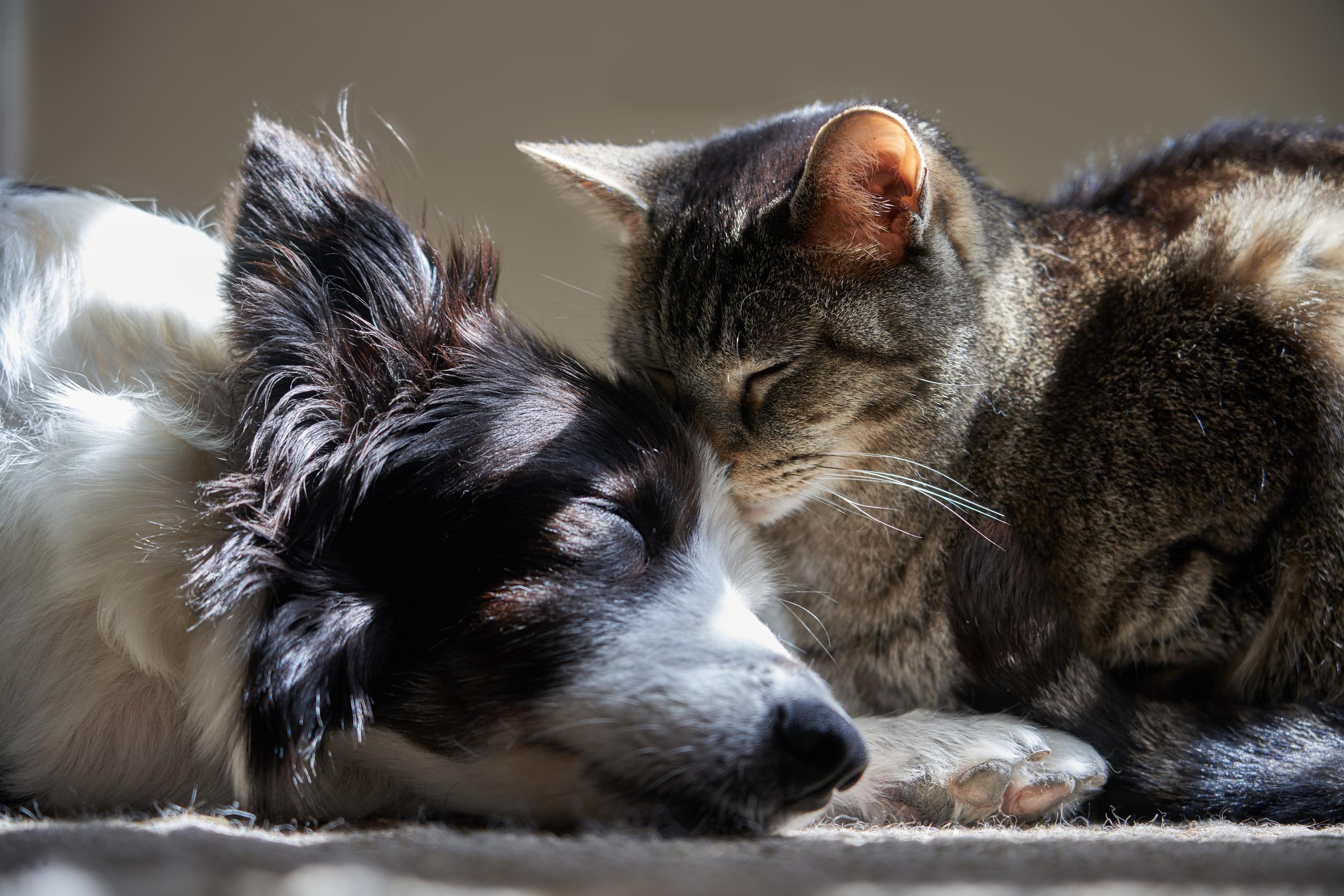


As your dog gets older, you might notice them spending more time sleeping, less interested in playing, or wanting more company when you're away. Would getting a cat give your dog a friend and some extra enrichment?
It can, but a cat isn't automatically the right companion for every dog. The best match depends on your dog's temperament, health, history with other animals, and your ability to introduce the pets slowly. In many cases, a calm adult cat can be a better fit than a high-energy kitten.
In this article
- Do Cats and Dogs Get Along?
- Why a Cat Might Be the Right Companion for a Dog
- When Getting a Cat for Your Dog Is Not a Good Idea
- Kitten or Adult Cat: Which Is Better for a Dog?
- How to Know if Your Dog Is Ready
- Practical Household Setup for a Dog and Cat
- How to Introduce a Cat to a Dog: Take the Slower Approach
- Signs Your Cat and Dog Are Getting Along
- One Thing Most People Miss: Your Dog's Needs Come First
- FAQs
Do Cats and Dogs Get Along?
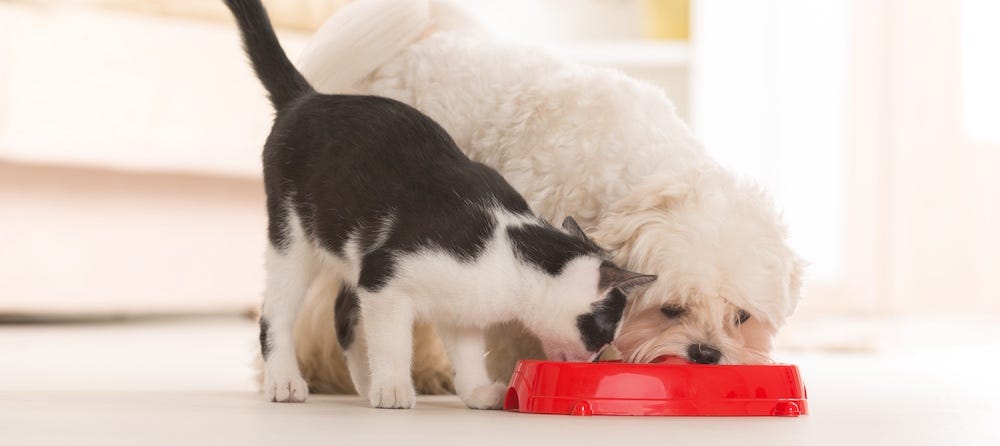
Yes, many cats and dogs can live happily together. Their success depends more on individual personalities and a careful introduction than on whether they're a cat or dog.
A calm senior dog can even be less intimidating to a cat than a young, energetic dog that wants to chase or play constantly.
How to Get a Cat and Dog to Get Along: What Makes a Pairing Work
Your chances are better when:
- Your dog has a low to moderate prey drive
- Your dog has lived with or been around cats before
- Your dog is generally calm and responsive to you
- The cat is confident, adaptable, or naturally mellow
- Both pets have places where they can retreat
- You're willing to introduce them gradually
Some dog breeds that are good with cats may also be naturally more cat-tolerant than others. And when choosing a cat, look for cats that get along with dogs rather than focusing on breed alone.
What makes it harder
A cat may not be a good fit if your dog has a history of chasing, stalking, or fixating on small animals. Likewise, a particularly fearful cat might struggle in a home with a dog that’s constantly moving around or trying to interact.
Your home's layout matters, too. A cat needs safe places to escape the dog, especially during the early stages of an introduction.
Why a Cat Might Be the Right Companion for a Dog
A cat and a dog can sometimes complement each other surprisingly well.
Dogs and cats often match each other's pace
An older dog may not want a puppy bouncing around the house. A relaxed adult or senior cat can offer companionship without demanding hours of running, fetching, or rough play.
That doesn't mean the pets have to become best friends. Simply sharing a home peacefully can give them enrichment and a sense of companionship.
Cats provide companionship without the same physical demands
A cat doesn't need to go on walks or play fetch every day. Your dog could simply enjoy having another animal nearby without being expected to keep up with a high-energy playmate.
A second pet can add variety to the household
Some research has suggested potential health and longevity benefits associated with multi-pet households, although that doesn't mean adding a pet will automatically make an individual dog healthier or happier.
The important question is whether your dog enjoys other animals and whether another pet would add to their quality of life.
Signs your dog might be lonely or understimulated
There isn't a single behavior that proves a dog needs another pet. However, you might notice:
- Increased clinginess when you're home
- Distress when you're away
- Less interest in activities they once enjoyed
- Increased attention-seeking
- Perking up noticeably around other animals
These signs can also have medical or age-related explanations, so talk with your vet before assuming loneliness is the cause.
When Getting a Cat for Your Dog Is Not a Good Idea
A cat shouldn't be brought home primarily to "fix" a problem with your dog.
Your dog is in pain or has mobility issues
If your dog is uncomfortable, adding a new animal could create more stress. Pain can also make dogs less tolerant of unexpected approaches from another pet.
Have your vet evaluate new behavioral changes before making a major household change.
Your dog has a history of chasing small animals
A dog that routinely chases squirrels, cats, or other small animals may not be a safe match for a cat.
Breed can influence prey drive, but individual behavior matters more. Don't assume your dog will suddenly ignore a cat because the cat lives in the same home.
Your dog is anxious or already under stress
Moving, changes in routine, health problems, or other household disruptions can already be taking a toll on your dog. Adding another animal could make things harder.
You don't have the bandwidth for a careful introduction
Introducing a cat and dog isn't something to rush. You'll need to manage separate spaces, feeding areas, litter boxes, and interactions while the pets adjust. If you don't have the time or space to do that safely, waiting may be the kinder choice.
Kitten or Adult Cat: Which Is Better for a Dog?
Yes. When you're choosing a cat companion for a dog, temperament is more important than age, but an adult cat is often easier to match with an older dog than a kitten.
Why a kitten may be the wrong choice
Kittens are curious, energetic, and sometimes completely unaware that a dog needs personal space. A kitten may repeatedly approach, pounce on, or try to play with a dog who would rather nap.
Why an adult or senior cat may be a better fit
An adult cat's personality is easier to assess. You may be able to choose a cat that’s already known to be comfortable around dogs and has a calmer temperament.
A mellow adult or senior cat may also be more naturally compatible with a senior dog's slower lifestyle.
What about adopting a bonded pair?
If you're considering two cats, a bonded pair will have an established relationship and routine. But don't assume two cats will automatically be easier for your dog. You'll still need to introduce the cats and dog carefully and provide enough space for everyone.
How to Know if Your Dog Is Ready
Before bringing home a cat, take an honest look at your dog's health, behavior, and environment.
Ask your vet first
Your vet can help you determine whether a senior dog is healthy enough for a household change and whether pain, cognitive changes, anxiety, or another issue could affect their behavior.
Assess your dog's prey drive and temperament
Think about how your dog responds to squirrels, rabbits, cats, and other small animals. Do they calmly watch? Try to chase? Stare and fixate?
A history of calm behavior around cats is a much more useful indicator than simply hoping they'll get along.
Evaluate your home setup
Ask yourself:
- Can you give the cat a separate room?
- Can the cat access high spaces the dog can't reach?
- Can you keep the pets separated when necessary?
- Can food and water stations remain separate?
- Can you keep the litter box away from the dog?
Practical Household Setup for a Dog and Cat
Good management can make the transition easier for everyone.
Create a cat-only zone
Give your cat a space your dog can't enter. It should include food, water, a comfortable resting area, hiding spots, and a litter box. This gives the cat somewhere to decompress and makes sure they always have an escape from the dog.
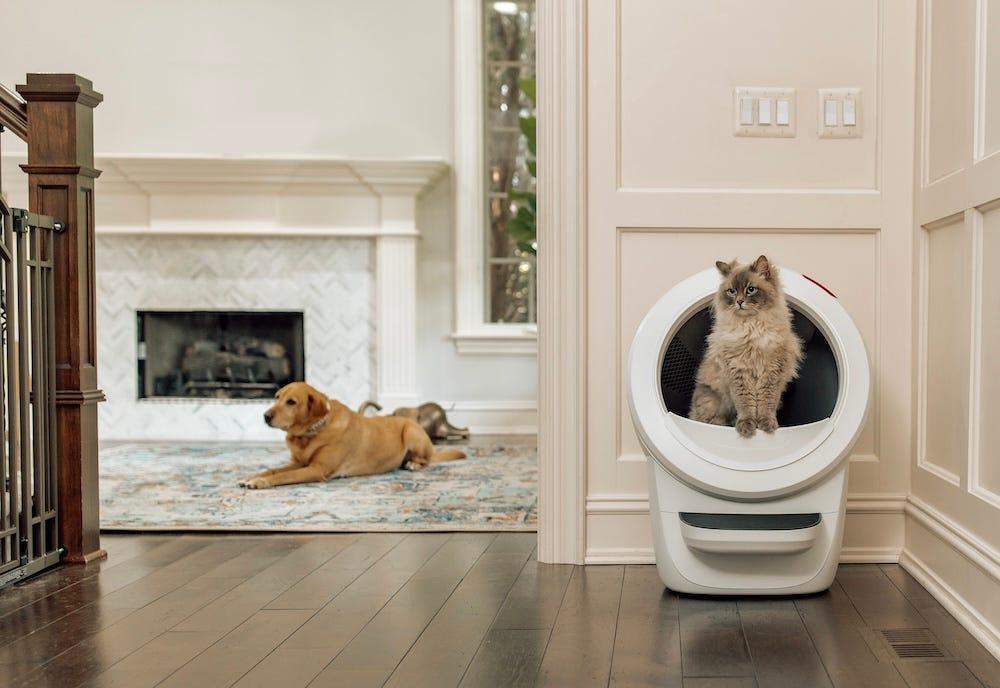
Dog-proof the litter box from day one
Dogs are often fascinated by litter boxes, and some will try to eat what's inside. Keeping the dog away protects the cat's bathroom routine and prevents another source of conflict.
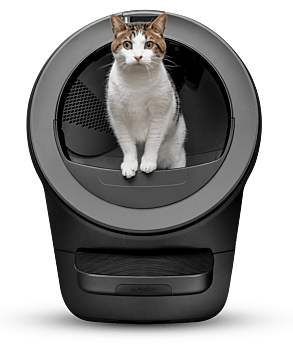
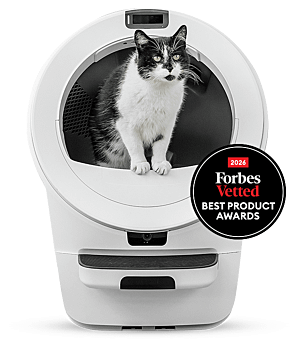
A self-cleaning litter box can also make management easier by automatically removing waste from the litter area and containing it in a drawer.
Keep feeding stations separate
Feed the pets in separate areas, particularly if either animal guards food. A cat should be able to eat without worrying about the dog approaching their bowl.
Give the cat vertical escape routes
Cat trees, shelves, and other elevated spaces let your cat get away from the dog without having to leave the room. This can be especially important when the dog is larger or less mobile but still wants to investigate.
How to Introduce a Cat to a Dog: Take the Slower Approach
Don't put the new cat and your dog together and hope they'll work it out. A gradual introduction gives both animals time to adjust.
Go slower than you think you need to
Senior dogs may take longer to adjust to changes in their routine, while a new environment can be overwhelming for a cat. Give both pets time to become comfortable before increasing their contact.
Watch your dog for signs of stress
Don't focus only on the cat. A stressed dog might sleep poorly, eat less, become unusually withdrawn, or stop moving comfortably around the home. If either animal is consistently stressed, go back a step.
Steps at a glance
- Start with scent – Swap bedding between the pets before they see each other.
- Feed through a closed door – Give both animals positive experiences while they're aware of the other nearby.
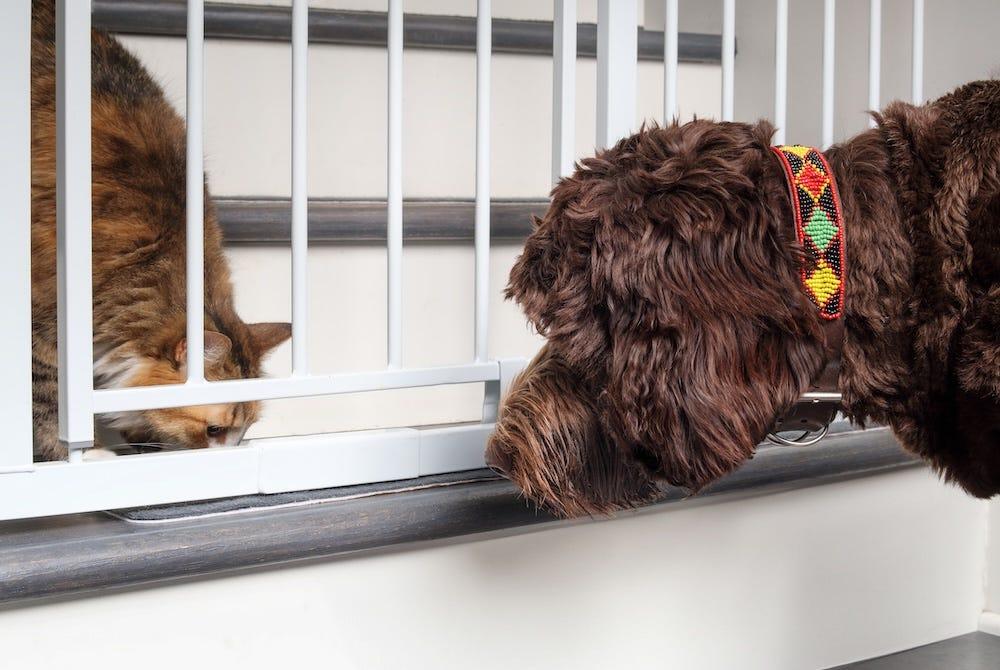
- Introduce visual contact – Use a baby gate for short, calm sessions.
- Try a leashed face-to-face meeting – Keep the dog on a leash while allowing the cat to approach or leave freely.
- Allow supervised off-leash interaction – A leash can initially be left dragging so you can intervene if necessary.
- Continue supervised coexistence – Don't leave the animals alone together until you're confident they're consistently calm and safe.
Signs Your Cat and Dog Are Getting Along
Your pets don't have to cuddle to have a successful relationship.
Signs things are going well
- They can relax in the same room
- They mostly ignore each other
- They occasionally sniff or investigate each other calmly
- They can nap near each other
- The cat chooses to approach the dog
- The dog remains relaxed when the cat moves around
Ignoring each other is perfectly fine. In fact, peaceful indifference is often a great outcome.
Yellow flags
Pay closer attention if:
- The dog constantly watches the cat
- The cat is hiding more than usual
- One pet consistently avoids parts of the home
- Either pet seems unable to relax when the other is nearby
Red flags
Separate the pets and reconsider your approach if you see:
- Staring or intense fixation
- Stiffening or lunging
- Chasing or cornering
- Persistent fear or hiding
- Loss of appetite
- Litter box avoidance
- Any physical fight or injury
If you're concerned about safety or can't make progress, ask your vet about working with a qualified behavior professional.
One Thing Most People Miss: Your Dog's Needs Come First
A cat companion for a dog can be a wonderful addition when the match is right. A calm adult cat may provide company and enrichment without asking an older dog to keep up physically.
But getting a cat for a dog shouldn't be treated as a cure for loneliness or boredom. If your dog is comfortable, healthy, and happy with their current routine, bringing home another animal may create unnecessary disruption.
Ultimately, the best choice is the one that supports both pets' quality of life. If your dog enjoys other animals, your home can accommodate separate spaces, and you're prepared to introduce them slowly, an adult cat could become a welcome part of the family.
FAQs
Is a cat a good companion for a senior dog?
A cat can be a good companion for a senior dog if both animals have compatible temperaments. A calm, cat-friendly dog and an adaptable adult cat are often a better match than a high-energy puppy or kitten.
What is the best cat breed for a dog?
There's no single best cat breed for dogs. Individual temperament matters more than breed. Look for an adult cat known to be confident, social, and comfortable around dogs.
How do I introduce a cat to my dog?
Start with separate spaces and scent swapping. Gradually progress to closed-door feeding, visual contact through a barrier, and short leashed interactions. Let the animals' comfort levels determine the pace.
Will getting a cat stress out my dog?
It can. A new pet changes the household routine, and some dogs may find that stressful. If your dog is already anxious, ill, or struggling with major changes, talk with your vet before adding another pet.
Is it better to get a kitten or an adult cat for a senior dog?
An adult or senior cat is often a better match because their personality and energy level are easier to assess. A kitten's constant activity can be frustrating for an older dog.
How do I keep my dog out of the cat's litter box?
Keep the litter box in a dog-free area, use barriers or elevated access when appropriate, and consider a litter box designed to keep waste contained. A self-cleaning litter box can also reduce the dog's access to exposed waste.
Sources:
Interrelationships of dogs (Canis familiaris) and cats (Felis catus L.) living under the same roof
Evaluation of the relationship between cats and dogs living in the same home